
Credit: washingtonpost.com
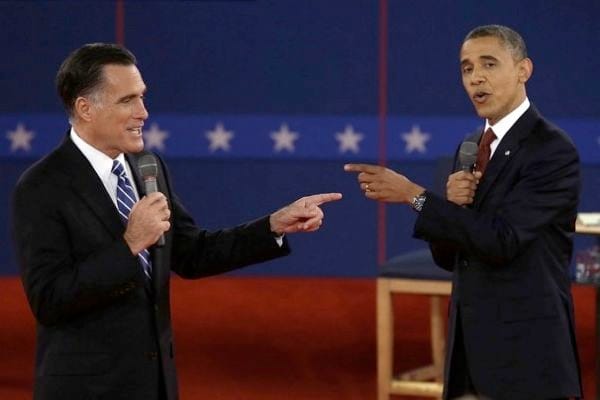
During the 2012 election cycle, Americans heard the use of such labels as the “culture war,” the “war on guns,” “the war on coal,” and the “war on the middle class.” Candidates and elected officials have been accused of “class warfare.” Anything that could be broken down to a partisan tit-for-tat became a war of words between two ideological points-of-view.
The debate over the contraceptive mandate in the Affordable Care Act, commonly referred to as “Obamacare,” became the “war on religion” and “war on conscience” for Republicans and conservatives. Progressive liberals and Democrats countered by accusing Republicans of waging a “war on women.” The use of the phrase “war on women” became a major part of the national dialogue after the subjects of rape and abortion jumped to the forefront of the debate on domestic issues.
On Monday, Mitt Romney referred to President Barack Obama’s energy policies as a war on oil, gas, and coal during one of his final campaign speeches before Election Day. It is a fitting way, perhaps, to end an election cycle that has been defined by such divisive rhetoric.
Politicians make it sound like they are facing an enemy on the front lines; battling their political opponents who only want to destroy America or eliminate the working class or drive the country over a cliff into a future of fiscal instability and economic collapse. Whether elected officials and candidates genuinely believe this seems to be inconsequential, because it makes good TV to make it look like both sides are constantly at each other’s throats. Down with the traitor if there should be any agreement or praise between two people on opposite sides of the political aisle.
Americans have witnessed one of the most polarized political eras in our nation’s history and many voters are looking for an end to politics as usual in Washington, and an end to the gridlock. However, the doom and gloom people have heard during the 2012 election season is not inspiring and it certainly doesn’t give people the impression that the leaders of the mainstream political parties will put Americans before partisan games.
Campaigns have been more about portraying political opponents as not just political enemies, but potentially detrimental to the future of the country, and therefore enemies of the people. However, the problem is not just with the candidates.
Super PACs fund ads that air nationally that paint an image of the future in very dark shades. What voters are left with is a dystopic picture of what these organizations want people to believe will happen if they choose one candidate over the other. There are ads that say if America continues down the path we are on now we will soon become indentured to China, despite the truth about our debt situation.
These organizations are so invested in a candidate they will not hesitate to spin the truth however they can and will spend millions of dollars trying to manipulate the American people. The result of this is the perpetuation of the politics of fear. Fear is a powerful motivator, but it is not a motivator the American people need or deserve. Voters deserve the truth. They deserve a real voice and real representation in Washington.
In an election cycle that can be summed up by the divisive and, sometimes, dehumanizing rhetoric that has turned it into one of the ugliest in our nation’s history, voter fatigue has never been higher. Many Americans are skeptical that they will see an end to politics as usual in Washington and they want the election to be over and done with.
Perhaps it is time for America to look for alternative paths, instead of seeing politics in the US in the black and white terms partisans want to continue to promote. People should not cast their ballots with gritted teeth, but with a smile on their face. People should be satisfied with their electoral decisions and not make such choices begrudgingly because they feel no other options are available to them.