 Shawn Griffiths

NYC Mayor Eric Adams and former New York Governor Andrew Cuomo are currently playing a game of chicken with each other – leveraging the city’s electoral system to pressure the other to quit the race. The question is:
Who will blink first? Or… are they headed for a collision?
Adams and Cuomo: Neither’s Campaign Can Survive While the Other Is in The Race
In the lead-up to the 2025 New York City mayoral general election, both Cuomo and incumbent Adams have publicly urged each other to exit the race, each positioning themselves as the most viable alternative to Democratic nominee Zohran Mamdani.
Cuomo already ran in the Democratic primary and lost to Mamdani by a considerable margin. However, now Cuomo is counting on general election turnout to look different from the primary turnout, which was restricted to party members only.
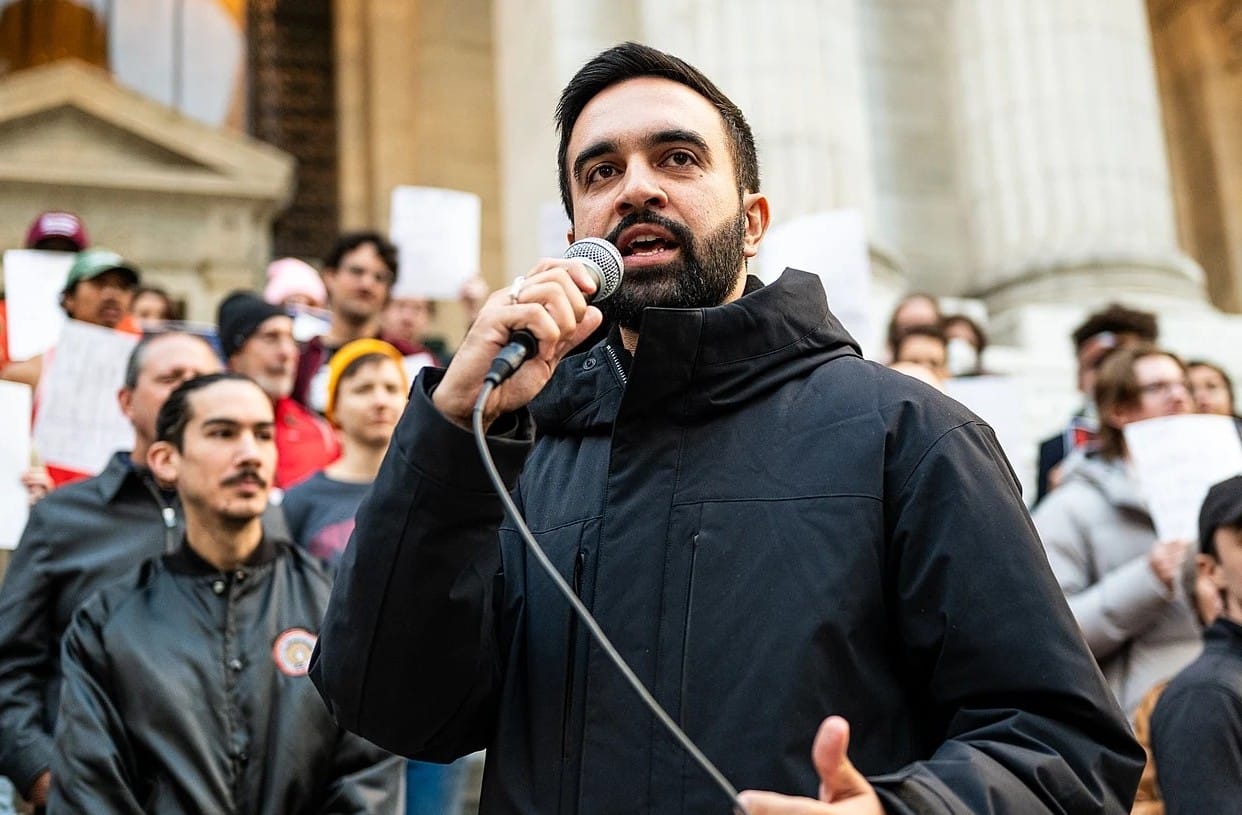
Cuomo’s strategy: To get all anti-Mamdani candidates to drop out of the race, including Mayor Adams and Republican Curtis Sliwa, so he can focus solely on Mamdani. He wants Adams and Sliwa to pledge to drop out by mid-September if polls show him in the lead.
And Cuomo made it official on Monday, July 14, that he is “in it to win it” and has no intention of leaving the race.
Adams responded to this plan with: “Are you kidding me?”
He criticized it as "the highest level of arrogance," and pointed out that Cuomo lost to Mamdani by 13 points in the primary after spending $25 million. He believes Cuomo should get out, referencing his 2002 third-party campaign that hurt Carl McCall's gubernatorial bid.
As of mid-July, Mamdani leads in the polls with 35% support, followed by Cuomo at 25%, Adams at 11%, and Sliwa at 14%. Because NYC does not have ranked choice voting (RCV) in the general election like they do in the primary, this race will be won by plurality.
The way Cuomo and Adams see it – they are splitting the same voting groups. This includes anti-Mamdani voters and big-money donors who don’t want to see the city elect a Democratic Socialist – and there is no way to know how independents will vote.
Looking at the current numbers, it appears neither will be able to beat Mamdani while the other remains in the race, and even then, it will be tight (assuming they can pull all of the voters that are leaning toward the other candidate).
Both Are Trying to Use NYC’s Elections Against the Other
The developing electoral drama between Adams and Cuomo is a result of how both have used New York City’s elections to benefit themselves and against each other. It has turned the entire thing into a messy situation.
First, NYC has a closed primary system that locks out more than 1.1 million registered independent voters. They have no say in who appears on the general election ballot. A proposal to end closed primaries could go before voters. However, it faces heavy opposition from the city’s power players.
Second, while NYC uses ranked choice voting in primary elections, it does not use it in general elections. This means the next mayor could be elected with 35% of the vote (maybe less!) if it remains a 4-person race (there is one additional independent candidate).
The likelihood of the only Republican dropping out? Near zero.
Cuomo saw an opportunity to win in a crowded Democratic primary field with RCV (he failed), while Adams knew he’d lose under a system that previously helped him become mayor. He reportedly could not build the coalition needed to get enough second- and third-choice votes among party voters.
Now, both Cuomo and Adams are using the lack of RCV in the general election against each other – knowing that their best chance of beating Mamdani is to pressure the other to drop out and by doing so pull in the other’s voters and big-money donors.
Once again, the question must be asked – how does this benefit voters?
The 2025 mayoral election is not incentivizing two high-profile candidates to win over New Yorkers – a prospect they know would be challenging with controversial records. Instead, they are incentivized solely to sabotage the other candidate and eliminate choice.
The focus is not what is best for voters. The focus is on the self-interests of New York’s biggest power players.