Skip to content
Subscribe

China Expands Influence in South China Sea with Strategic Ally

China Expands Influence in South China Sea with Strategic Ally
Published:

While the American media's interest in Asia seems solely focused on the recovery efforts of Flight 370, China is once again expanding its sphere of influence by holding multi-national joint naval drills at the end of this month. The People's Daily News has reported that ships from 4 countries have already arrived, with officers from over 20 nations expected to participate.

Last month, I reported that China was making significant changes to its overall military strategy, changes that were a fundamental departure from Maoist and Taiwan strategies. This appears to be a continuation of this theme, with a significant plot twist. The tiny nation of Brunei will participate for the first time in military exercises with Chinese forces.

Brunei was once a small British colony located on the South China Sea and is part of the larger island of Borneo. Brunei gained its independence from the U.K. in 1984, and has very rich oil and gas production and reserves. Even more impressive, almost unheard of in the modern world, Brunei has almost no national debt.
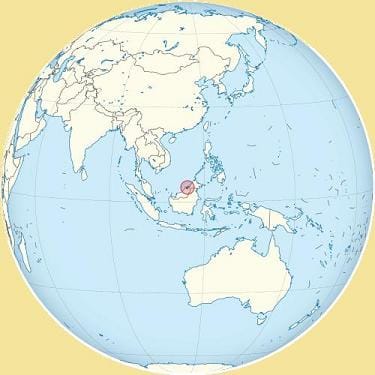
brunei

Strategic alliance with Brunei makes sense for the Chinese government. Brunei offers natural resources and economic capital, while the Chinese offer considerable military and political protection. It also gives China an important regional ally when it comes to the increasing territorial disputes in the South China Sea.

Currently, China is locked in territorial disputes with the Philippines, Vietnam, and Indonesia. This move potentially gives China a forward position that is centrally located to all three disputed regions.

Australia already sees China as its biggest threat, both militarily and economically. While American influence in the region continues to shrink, Chinese influence is expanding at a rapid pace.

The American reaction to these developments seems a bit small in comparison, increasing the number of U.S. Marines deployed in Darwin, Australia to 1,000 (from 250) with the intention of increasing to 2,200. The sad reality is that the United States has few allies in the South China Sea, even relations with the Philippines have strained in recent years.

For America to have a clear-cut strategy against the growing influence of the Chinese military, we will have to win back the popular support of the Oceanic nations -- something that is going to take a considerable nonpartisan effort from the American government.

Newspapers in China, Australia, and Britain have all mocked the American fascination with searching for the missing plane. Perhaps it's easier to hunt for a mystery in the middle of the ocean than deal with the real looming dangers that await us there.

No photo credit attributed

Adhere to the IVN etiquette

By posting a comment, you agree to adhere to our etiquette rules: No partisan attacks, no personal attacks, substantiate your sources, no self-promotion.

Contact IVN

Questions about this article or our coverage? Send us a message. A free IVN member account is required.

Message sent

Thanks, we’ll review it and get back to you if needed.

Message not sent

Sorry, something went wrong. Please try again.

Sign in to send a message

Messages are tied to your IVN member account. Signing in is free and takes a few seconds.

Republish this article

Republishing guidelines

Republish IVN articles for free. Independent Voter News articles may be republished online or in print under a Creative Commons BY-NC-ND 4.0 license, on these terms:

  1. Credit the author and IVN. Keep the byline ("By Author Name, Independent Voter News") and the attribution note at the end, which links to the original.
  2. Keep the meaning. You may update time and place references and apply your house style. You may trim for length, as long as the cuts don't change the meaning or misrepresent the author. Keep the headline. Mark any additions as your own (for example "Additional reporting by ...").
  3. Translations are welcome. Translate faithfully, add "Translated from English by [your outlet]", and tell us at editor@ivn.us.
  4. Keep the links, including the link to the original article.
  5. Keep the tracking image. The HTML includes a 1-pixel image that counts readers on your page. It collects no personal information.
  6. Photos and illustrations. Images credited to IVN may be used with this article only. Images credited to others (AP, Getty, Unsplash, Wikimedia and so on) stay under their owners' terms. Secure the rights or switch "Include images" off.
  7. Don't sell it. You can't sell our articles or sell ads specifically against them. Your normal site advertising is fine.
  8. No implied endorsement. Don't suggest that IVN or the author endorses you, your candidates or your causes, or that donations to you support IVN.
  9. Keep labels. Opinion or analysis pieces keep that label.
  10. Point search engines to the original. Where your CMS allows, set the canonical URL to the original IVN article.
  11. No bulk or automated republishing, and don't submit our articles to aggregators (Apple News, Google News, MSN) as your own.
  12. Corrections and removals. Update your copy when we correct it, and remove it promptly if we ask. We'll contact you at the email you give us.
  13. Questions or print republication: editor@ivn.us.

IVN staff: fill in who you're inviting above, then create the invite.

Preparing the article

China Expands Influence in South China Sea with Strategic Ally

Choose a format
  • HTML
  • Email HTML
  • Markdown
  • Formatted (.docx)
  • Plain text
  • WordPress blocks
  • PDF
Choose a platform

Photos credited to others need their owners' permission.

To for

Republishing somewhere else? Questions? editor@ivn.us