
The challenges presented to schools by the pandemic, particularly those serving students and families living in historically under-resourced communities, aren’t new -- these problems have long existed. But, the pandemic has exacerbated them, and it’s time we address these long-term challenges by how we are adapting in the short-term due to COVID-19.
One thing we know is students and families look to their schools for resources and support needed to set students up for success. At KIPP Adelante Preparatory Academy, a public school in Southeastern San Diego, we’ve learned the below programs have been most helpful to families during this time.
- Meal Distribution: We know that more families in general are struggling to make ends meet right now and that includes meals that their children would usually get at free or reduced prices at school. For example, in the SANDAG and Road to Recovery Coalition 2020 survey, over half of Southeastern San Diego families marked food security as a need. In response, across Southern California, KIPP SoCal has provided over 900,000 socially distanced community meals and will continue to do so. Specifically, KIPP Adelante is providing meals for any student/child under the age of 18 from Monday through Friday, 11 a.m. to 2 p.m., at 426 Euclid Ave., San Diego, CA 92114 (behind the Joe & Vi Jacobs Center). This program is funded by the San Diego Unified School District.
- Tech Access and Support: It is uncommon for a family to have a computer for each member of the household and the Internet bandwidth to support everyone. That same SANDAG survey reported that only 15 to 23% of families in Southeastern San Diego have access to high-speed WiFi. When the pandemic hit last spring, KIPP Adelante, along with other KIPP SoCal schools, distributed a combined 3,700-plus Chromebooks and more than 800 hotspots to ensure that each student had access to our distance learning program. An equitable technology experience for all is key for any student to be able to learn and learn well.
- Community Education Courses: As much as we know this is a change for our school team, we also know that this is a new way of learning for families. They say parents/guardians are a child's first teacher ... we are all teachers working together as an ecosystem of support for our children. We’ve hosted and will continue to have community education courses such as “A Guide to College for Middle School Families,” “Parenting & Teaching in a Virtual World,” “Health & Wellness at Home,” “Literacy, Math, and Technology Nights,” plus additional student and family supports. As educators, we understand that distance learning creates new challenges for families, and we appreciate the critical role parents/guardians play in helping us to overcome hurdles so that the learning continues.
- Mental Health & Support Services:We believe mental health and wellness support is critical and too often gets put on the back burner. All KIPP students receive daily mindfulness and team-building opportunities, weekly social emotional lessons, monthly #WellnessWednesday information sessions and virtual calm corner mindfulness techniques to help them cope with strong feelings and stress, strengthen social skills, and build responsible decision-making. Middle school is an especially big period of change for students and the current isolation from their peers and teachers, plus the uncertainty the pandemic brings, is a lot to handle. We also partner with local community mental health agencies like the Family Health Centers of San Diego should parents/guardians be interested in therapy for their child.
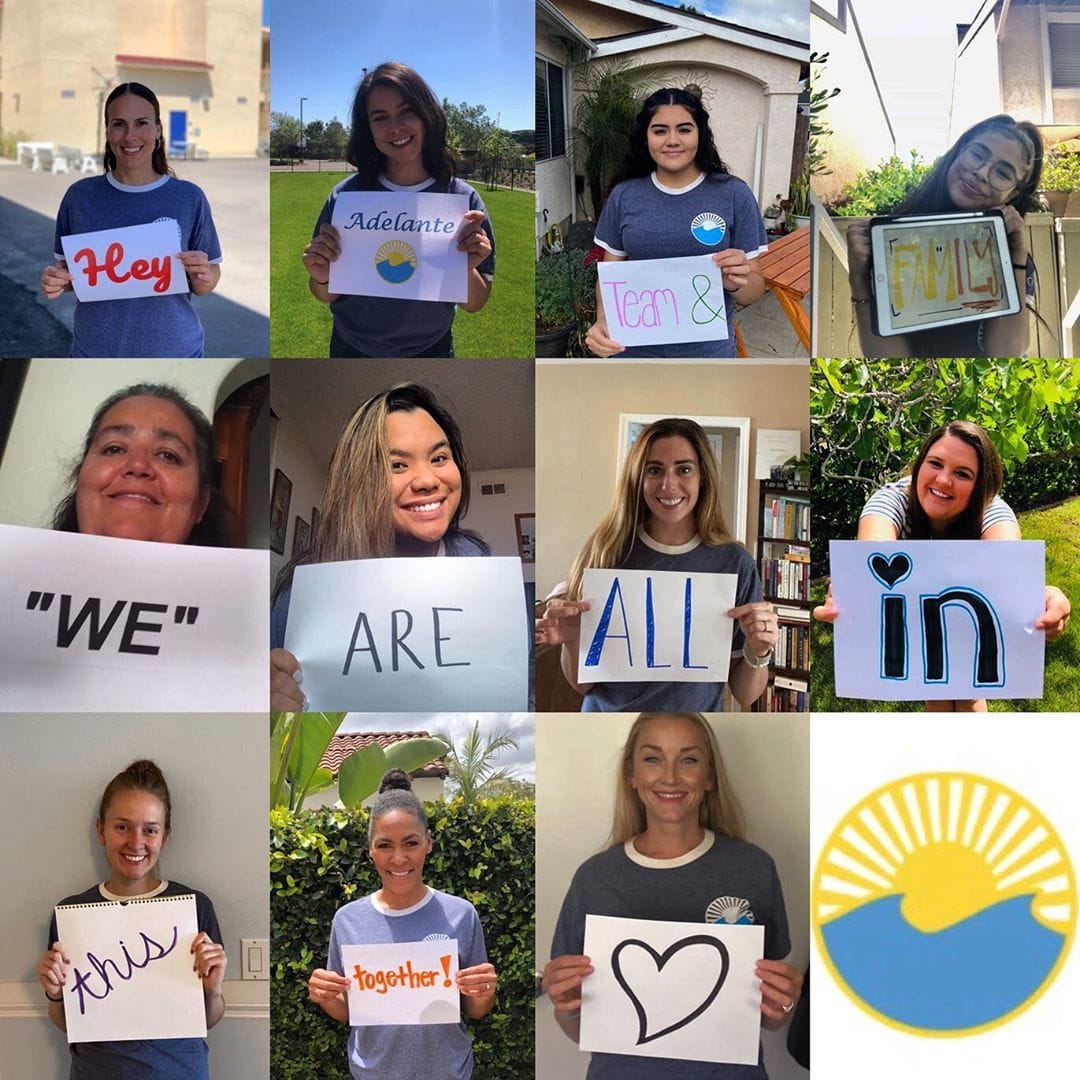
While there is so much for us to improve in our systems, schools must also work to leverage practices that worked well for students when we were physically on campus and get creative on how to best translate them online:
- Schedules with a balance of predictability/structure and flexibility. In a world where there is much uncertainty, children can benefit from predictability. They want the assurance of knowing what to expect each day and that they will have reliable access to teachers and staff through classes, individual check-ins, and via text, phone and email. Through regular surveys and feedback from students, the team and parents, we create plans and regularly monitor feedback to ensure that our plans are continuing to meet the intended purpose and needs of the community in a dynamically changing environment.
- Live interactive learning. All of our classes are taught “live” so that teachers give real-time feedback, differentiate instruction and help with student accountability. Responding to student work with timely feedback and responsive adjustments, allows all students to accelerate their learning. During live classes, students with Individualized Educational Plans (IEPs) continue to have access to instructional content with accommodations and modifications, and a focus on accessibility. All of our math and English classes are co-taught by general and special education teachers. Live, or “synchronous” classes are proving beneficial for all learners. Adapting the live sessions to include differentiation -- such as opportunities for reteach, acceleration, small groups and supported independent practice have all been helpful for engaged learning.
- Live physical education and art instruction daily. Igniting hearts and minds includes attending to the health of our bodies and creative expression through the arts. We provide students with at least 60 minutes of moderate-to-vigorous physical activity multiple times a week. Plus, via art instruction, students can develop creative expression, innovativeness, language skills, motor skills and social skills.
- Building community through the joy of reading. Reading is so essential in and out of school. We know that reading proficiency can be a determinant of success in schools, access to careers and, ultimately, choice and independence. To help, we’ve created virtual book clubs to continue to build a love of literacy and a culture of reading. Split into small groups, all team members work with a cohort of students to read high-interest grade level texts. We have also made all books in our school available for students to check out, so that every child has multiple books to read at home, in addition to online reading resources.
- Meaningful and contextualized instruction for the current world. It’s been proven that students are more engaged if they can relate what they are learning about to their everyday lives. KIPP offers advisory courses to explore themes of identity, justice, inclusion, diversity and advocacy. There is a school-wide anchor text for advisory, and the students watch the news and dissect current events, while also using social justice standards to understand and ask essential questions across all their classes. This is how schools can help create bold future leaders.
- Fostering a sense of belonging and connection. Personal connections are harder to build virtually but nonetheless vital. Advisories, book clubs, daily live lessons, one-on-one check-ins, daily homeroom time, weekly celebrations, social virtual lunches and monthly ceremonies must be grounded in restorative practices and relationship development. Plus, fun matters! We need the chance to laugh and create joy together as a community -– it is essential for learning and for life!
And while we know that there is simply no substitute for in-person learning, we believe that through a comprehensive distance learning program -- and changing the system to more effectively serve all children -- students and families can still succeed. We’re rooting for it.