Skip to content
Subscribe

Memoir Gives First-Hand Account of the Real Crises on the Southern Border

Memoir Gives First-Hand Account of the Real Crises on the Southern Border
Published:

Since the New Year, I have been reading a steady diet of memoirs. The genre has captivated me since working with my 93-year-old father to finish his memoir, Hilltop Echoes, about growing up on a farm in rural Massachusetts. His book explores family secrets, the joys of a secret trout fishing spot, the loss of his beloved father, moving off the farm and entering the Marines... all told against the backdrop of the New England countryside.
‍

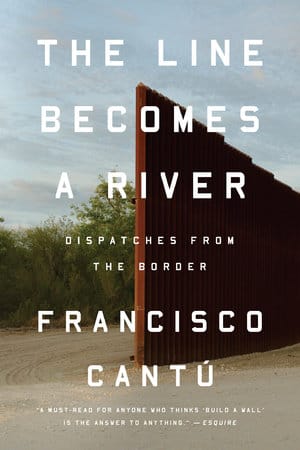
On the memoir road these last two months, I have met Tara Westover’s Educated; Inheritance: A Memoir of Genealogy, Paternity and Love by Dani Shapiro; Michelle Obama’s Becoming; and Deep Creek: Finding Hope in the High Country by Pam Houston. I recommend all four. The fifth memoir is a stand out: The Line Becomes A River by Francisco Cantú.

With the partisan debate about immigration and the wall, I realized I knew little about what our 1,954-mile southern border is like for the people desperately trying to cross it in hopes of a better life, and the agents who patrol it.

Francisco Cantú, a third-generation Mexican American, became a Border Agent after college at the age of 23 and served for four years. His book gives us a nonlinear, at times poetic, account of his experiences — of the desert, the thirst, the desperation of those trying to cross into the US seeking a better life, the roles of the cartels and gangs that prey on people looking for safe passage, and the often dehumanizing tactics of the U.S. Border Patrol.

In an essay in the New York Review of Books, Francisco says, “When I began writing, I knew that the book must be anchored by an exploration of the myriad ways violence becomes normalized along the border.”

The book follows the author’s time as an agent along the border and later as an intelligence officer. Francisco began to suffer from nightmares and frequent teeth grinding, and many second thoughts about his role. As his mother reminds him, “You can’t exist within a system for that long without being implicated, without absorbing its poison.”

The third section of the book tells of Francisco's friendship (while a graduate student) with José, who travels back to Mexico to visit his dying mother and is captured and arrested as he tries to return. Francisco stands with his friend and José’s family as they go through the process and see their beloved husband and father deported.

In one of the final chapters of the book, José tells Francisco that he will continue to attempt to cross, no matter the risk: “I will do anything to be on the other side. To be honest, I would rather be in prison in the U.S. and see my boys once a week through the glass than to stay here and be separated from my family…”

The Line Becomes A River is a haunting memoir about the people on the border and the desert and the shadows that make it hard for us all to see one another. It’s about much of what is missing in the partisan conversation about immigration and "the wall." Can we break down the partisan walls enough to let the actual people on the border, both sides of it, inform our conversations?

‍

Photo Credit: Chess Ocampo / shutterstock.com

Adhere to the IVN etiquette

By posting a comment, you agree to adhere to our etiquette rules: No partisan attacks, no personal attacks, substantiate your sources, no self-promotion.

Contact IVN

Questions about this article or our coverage? Send us a message. A free IVN member account is required.

Message sent

Thanks, we’ll review it and get back to you if needed.

Message not sent

Sorry, something went wrong. Please try again.

Sign in to send a message

Messages are tied to your IVN member account. Signing in is free and takes a few seconds.

Republish this article

Republishing guidelines

Republish IVN articles for free. Independent Voter News articles may be republished online or in print under a Creative Commons BY-NC-ND 4.0 license, on these terms:

  1. Credit the author and IVN. Keep the byline ("By Author Name, Independent Voter News") and the attribution note at the end, which links to the original.
  2. Keep the meaning. You may update time and place references and apply your house style. You may trim for length, as long as the cuts don't change the meaning or misrepresent the author. Keep the headline. Mark any additions as your own (for example "Additional reporting by ...").
  3. Translations are welcome. Translate faithfully, add "Translated from English by [your outlet]", and tell us at editor@ivn.us.
  4. Keep the links, including the link to the original article.
  5. Keep the tracking image. The HTML includes a 1-pixel image that counts readers on your page. It collects no personal information.
  6. Photos and illustrations. Images credited to IVN may be used with this article only. Images credited to others (AP, Getty, Unsplash, Wikimedia and so on) stay under their owners' terms. Secure the rights or switch "Include images" off.
  7. Don't sell it. You can't sell our articles or sell ads specifically against them. Your normal site advertising is fine.
  8. No implied endorsement. Don't suggest that IVN or the author endorses you, your candidates or your causes, or that donations to you support IVN.
  9. Keep labels. Opinion or analysis pieces keep that label.
  10. Point search engines to the original. Where your CMS allows, set the canonical URL to the original IVN article.
  11. No bulk or automated republishing, and don't submit our articles to aggregators (Apple News, Google News, MSN) as your own.
  12. Corrections and removals. Update your copy when we correct it, and remove it promptly if we ask. We'll contact you at the email you give us.
  13. Questions or print republication: editor@ivn.us.
Preparing the article

Memoir Gives First-Hand Account of the Real Crises on the Southern Border

Choose a format
  • HTML
  • Email HTML
  • Markdown
  • Formatted (.docx)
  • Plain text
  • WordPress blocks
  • PDF
Choose a platform

Photos credited to others need their owners' permission.

Republishing somewhere else? Questions? editor@ivn.us