Skip to content
Subscribe

New California Cannabis Testing Standards Supported by Retailers Like March and Ash

New California Cannabis Testing Standards Supported by Retailers Like March and Ash
Published:

San Diego, CA.- The quality of the product sold at cannabis shops is obviously critical for success. So anytime there are questions about potency and product value, important questions need to be asked.

A recent Associated Press report stated nearly 20 percent of cannabis products in California failed tests for potency and purity since the state started requiring the checks on July 1.

The testing has been especially tough on cannabis-infused cookies, candies and tinctures: Since the study, about one-third have been blocked from store shelves.

PharmLabs in the Midway District is a licensed, accredited cannabis lab in San Diego.

Melissa Nutter, the lab director, said the 18% test failure is not surprising. “Testing methodologies are not standard, so if a manufacturer does research and development of a product at one lab and then goes to another lab to test for legal compliance, the results may differ,” Nutter said.

Some in the industry say that has more to do with unrealistic standards and technical glitches than protecting consumer safety.

New Cannabis Store Supports Strict Standards
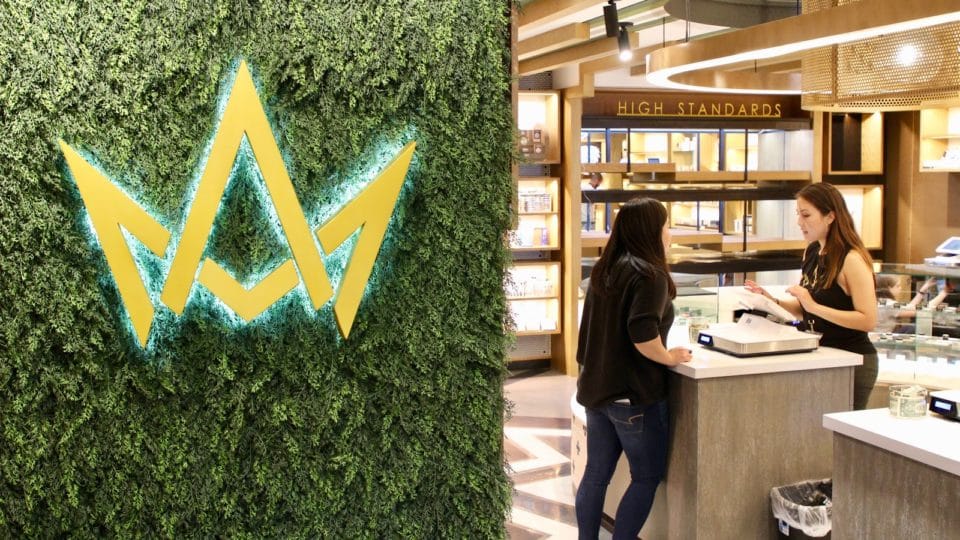
March and Ash

March and Ash just launched its first upscale boutique in Mission Valley just east of Texas Street.

Its owner, Blake Marchand, has been a strong proponent of stricter testing standards.

March and Ash Cannabis Concierge

March and Ash was featured in this story on KUSI supporting the states strict testing regulations. CEO Blake Marchand told me, "I don't think the state testing standards are too stringent, we actually support it, we want to have a product that we're confident behind and feel comfortable when our customers leave the shop."
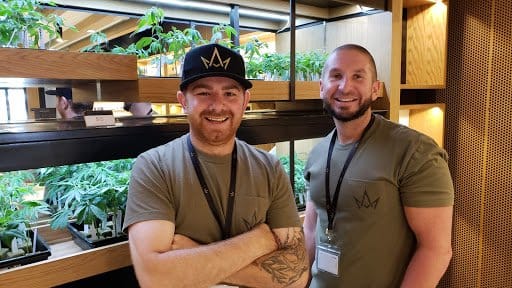
Jon Saco and Blake Marchand, March and Ash Owners

Testing Continues

While March and Ash and other dispensaries work to build their business, the state continues to scrutinize the product on the shelves, making sure the public is being protected.

A statement from the California Department of Public Health read it had not received any verified reports of illness resulting from consumption of a cannabis product attributed to mold or bacteria, although three complaints were submitted anonymously.

The debate over testing isn't just about lab procedures or allowable levels of pesticides. It all comes with a cost, and for some companies providing the product, they say it’s straining their budgets. "Testing is currently costly, slow, and inconsistent," the growers association told the state in a recent letter.

Adhere to the IVN etiquette

By posting a comment, you agree to adhere to our etiquette rules: No partisan attacks, no personal attacks, substantiate your sources, no self-promotion.

Contact IVN

Questions about this article or our coverage? Send us a message. A free IVN member account is required.

Message sent

Thanks, we’ll review it and get back to you if needed.

Message not sent

Sorry, something went wrong. Please try again.

Sign in to send a message

Messages are tied to your IVN member account. Signing in is free and takes a few seconds.

Republish this article

Republishing guidelines

Republish IVN articles for free. Independent Voter News articles may be republished online or in print under a Creative Commons BY-NC-ND 4.0 license, on these terms:

  1. Credit the author and IVN. Keep the byline ("By Author Name, Independent Voter News") and the attribution note at the end, which links to the original.
  2. Keep the meaning. You may update time and place references and apply your house style. You may trim for length, as long as the cuts don't change the meaning or misrepresent the author. Keep the headline. Mark any additions as your own (for example "Additional reporting by ...").
  3. Translations are welcome. Translate faithfully, add "Translated from English by [your outlet]", and tell us at editor@ivn.us.
  4. Keep the links, including the link to the original article.
  5. Keep the tracking image. The HTML includes a 1-pixel image that counts readers on your page. It collects no personal information.
  6. Photos and illustrations. Images credited to IVN may be used with this article only. Images credited to others (AP, Getty, Unsplash, Wikimedia and so on) stay under their owners' terms. Secure the rights or switch "Include images" off.
  7. Don't sell it. You can't sell our articles or sell ads specifically against them. Your normal site advertising is fine.
  8. No implied endorsement. Don't suggest that IVN or the author endorses you, your candidates or your causes, or that donations to you support IVN.
  9. Keep labels. Opinion or analysis pieces keep that label.
  10. Point search engines to the original. Where your CMS allows, set the canonical URL to the original IVN article.
  11. No bulk or automated republishing, and don't submit our articles to aggregators (Apple News, Google News, MSN) as your own.
  12. Corrections and removals. Update your copy when we correct it, and remove it promptly if we ask. We'll contact you at the email you give us.
  13. Questions or print republication: editor@ivn.us.

IVN staff: fill in who you're inviting above, then create the invite.

Preparing the article

New California Cannabis Testing Standards Supported by Retailers Like March and Ash

Choose a format
  • HTML
  • Email HTML
  • Markdown
  • Formatted (.docx)
  • Plain text
  • WordPress blocks
  • PDF
Choose a platform

Photos credited to others need their owners' permission.

To for

Republishing somewhere else? Questions? editor@ivn.us