
Credit: Loop21.com
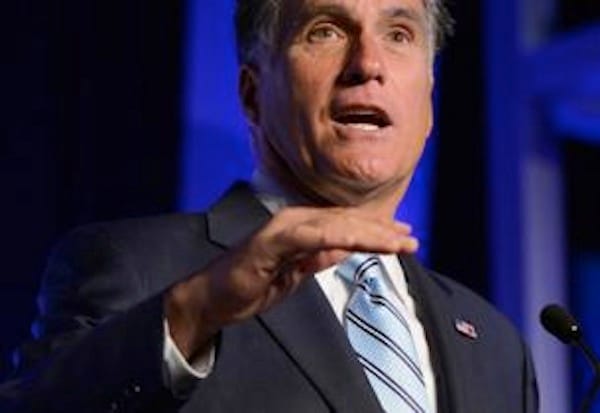
Mitt Romney’s campaign is experiencing severe backlash over comments the GOP presidential hopeful made back in May during a private fundraising event in Florida.
Romney was caught on camera telling his audience that forty-seven percent of voters are going to stand by President Barack Obama no matter what because they want to be dependent on government assistance and don't take personal responsibility for their own lives. The remarks, which political opponents say reveal Romney’s true colors, have been the subject of mass media scrutiny after the video went viral this week.
The ‘forty-seven percent’ comment is based off a study released by the Tax Policy Center in July 2011. The detailed analysis reveals that 46.4 percent of American households paid no federal income tax that year. More specifically, these people received back all or most of wages withheld from their paychecks by the government for tax purposes and therefore didn’t owe income tax.
Why did 46.4 percent of American households not owe income tax in 2011?
It is not a figure commonly seen in a healthy economy. The natural result of the worst recession the US had experienced in decades was that several people lost their jobs, median household income dropped, and people fell into lower tax brackets. Many people owed less in income tax and, in some cases, fell into a bracket that excused them from paying any income tax at all.
That being said, it would be irresponsible to make the claim that 46.4 percent or forty-seven percent of Americans don’t pay taxes and completely depend on the government. Nearly two-thirds of the households that paid no income tax last year had to pay payroll tax on top of a variety of other taxes that include state, local, sales, gas, and property taxes.
Just over twenty-eight percent of total households owed payroll tax in 2011, but didn’t pay income tax. Senior citizens make up half of the remaining households, which leaves roughly seven percent of Americans that are non-elderly citizens who make less than $20,000 a year. Less than one percent of the US population makes more than $20,000 annually and just don’t pay income tax.
To Romney’s credit, he did specify that forty-seven percent of Americans don’t pay income tax, but he also said that these same people are dependent on government, which is far from the truth. The people who would be most dependent on government are the income earners who fall below the poverty line and senior citizens. Therefore, we are looking at a figure closer to twenty percent of the population depending on how one defines ‘dependency.’
The Democrats were quick to jump on this. They want to convince people that this is what Mitt Romney truly thinks of the American people. It’s an easy soundbite to take out of context because Romney was in a position where he didn't feel it necessary to be more cautious about word choice. He was speaking before an audience of big money donors at a closed-door fundraising event.
Rep. Paul Ryan, Romney’s running mate, even commented that Mitt Romney was “obviously inarticulate.”
“He was obviously inarticulate in making this point, and the point we’re trying to make here is, under the Obama economy, government dependency is up and economic stagnation is up, and what we’re trying to achieve is getting people off of government dependency and back to a job that pays well that gets them on the path of prosperity.”
The inability of the GOP presidential nominee to appeal to a variety of different demographics within the voting age population, including independent voters, has become a punchline for late night shows. However, it is a real problem Romney is experiencing on the campaign trail.
Last week, Romney said the definition of ‘middle income’ is “$200,000 to $250,000 and less.” These type of remarks are easily perceived as detachment from the reality of what middle income earners are experiencing in a tough economy. What are voters to think when they see a video of Romney telling wealthy donors that forty-seven percent of Americans say they are victims, want to be dependent on government, and don't take responsibility for their own lives?
For presidential campaigns, specifically for the mainstream candidates, the primary goal is to get to 270 electoral votes. To reach that number, campaign strategists will target the specific segments of the voting age population they believe the candidate needs to get there. Campaigns, Republican or Democrat, constantly engage in election politics and the viral video of Romney speaking before donors reveals election politics in its purist form.