 Cara Brown McCormick

For nearly a decade, foreign policy analysts, former generals, and everyday citizens have been asking a once-unthinkable question: Is World War III on the horizon? Now, the question may not be whether it's coming, but whether it has already begun.
The last 5 to 10 years have seen a steady drumbeat of global instability. First, the Russian invasion of Ukraine on February 24, 2022, triggered the largest land war in Europe since World War II. The West’s unified response, including billions of dollars in military aid and sanctions, locked NATO into a long-term confrontation with Moscow.
Then came October 7, 2023, the date of Hamas’s deadly surprise attack on Israel. This sparked a war between Hamas and Israel that is still ongoing, and the regional consequences have only widened.
Today, Israel and Iran are openly at war. Bombings have struck both territories. Retaliatory drone and missile attacks are ongoing. U.S. forces are in harm’s way across the region, raising fears of broader escalation.
Returning early from the G-7 Summit, Trump called on Iran to unconditionally surrender and said on Truth Social that the leader of Iran is an "easy target."
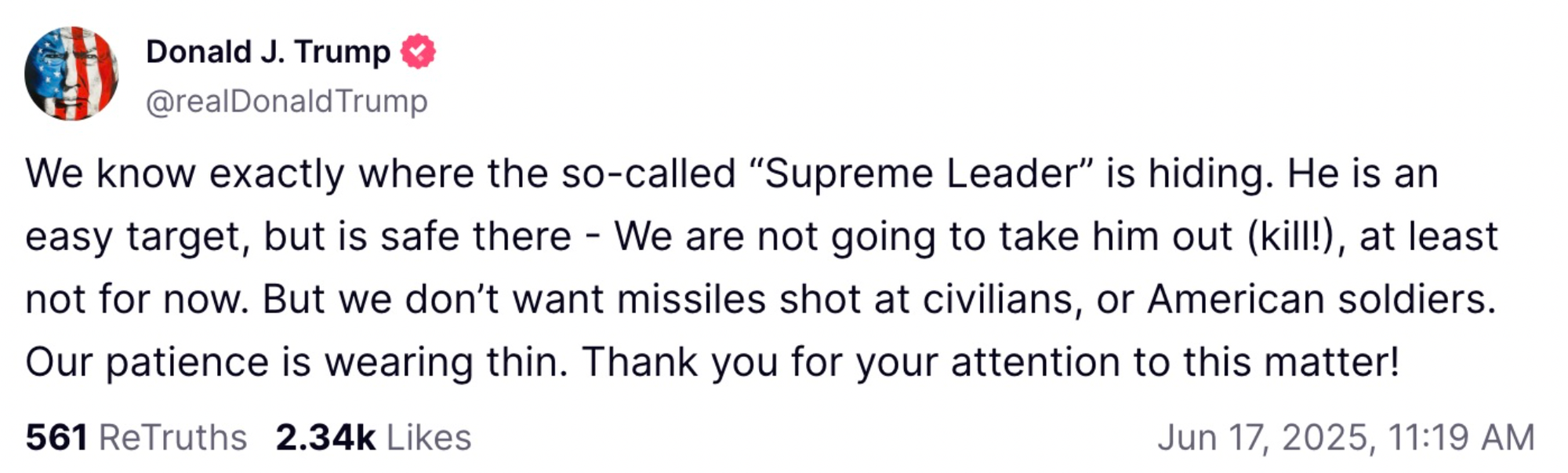
On the afternoon of June 17, the President was said to be meeting with national security officials in the Situation Room and considering a range of options, including "a potential U.S. strike against Iran," according to the Wall Street Journal.
Meanwhile, China continues to increase military pressure on Taiwan. North Korea has resumed weapons testing. Pakistan, which borders both China and Iran, is navigating internal unrest while maintaining its nuclear arsenal. And cyberattacks on critical infrastructure in the U.S. and Europe have been traced back to state-backed groups in Russia, China, and Iran.
A Global Web of Conflict
This isn’t a single war with clearly defined sides, at least not yet. But the growing number of flashpoints, overlapping alliances, and nuclear-armed nations makes the situation eerily reminiscent of the early 20th century, when a tangled web of treaties turned a regional assassination into a global catastrophe.
Even President Donald Trump has repeatedly warned, “We are heading to World War III,” claiming he could stop it “on Day One” if elected.
But Democrats and Republicans alike now find themselves navigating an increasingly complex landscape of proxy conflicts, defense commitments, and deepening mistrust between global powers.
A Constitutional Crossroads
One point of agreement across the political spectrum: if the U.S. is drawn further into any of these conflicts, Congress should debate and declare war, as the Constitution requires.
Both progressive Democrats and libertarian-leaning Republicans have raised concerns about presidents deploying troops without explicit authorization, a practice that has become the norm in the post-9/11 era.
The last formal declaration of war by Congress came in 1942. Since then, military action in Vietnam, Iraq, Afghanistan, Syria, and Libya has often proceeded under vague or outdated authorizations, or none at all.
Kaine Seeks to Block Unauthorized War with Iran
On June 16, Senator Tim Kaine (D-Va.) introduced a War Powers Resolution requiring congressional approval before any U.S. military action against Iran. The move comes amid escalating violence and fears the U.S. could be drawn into a broader war.
“It is not in our national security interest to get into a war with Iran unless that war is absolutely necessary to defend the United States,” Kaine said. “The American people have no interest in sending servicemembers to fight another forever war in the Middle East.”
Kaine’s resolution, which is “privileged” and therefore requires debate and a vote under Senate rules, reinforces Congress’s constitutional authority to declare war and bars unauthorized offensive action. However, it allows for self-defense against imminent attacks.
Kaine has long advocated for reining in executive war powers. He serves on both the Senate Armed Services and Foreign Relations Committees. He is the father of a military member.
In 2018, Kaine wrote a piece in The Atlantic warning that Trump was blundering toward war with Iran. In March 2020, Congress passed Kaine’s bipartisan war powers resolution to prevent further escalation of hostilities with Iran without congressional authorization. In 2023, the Senate passed bipartisan legislation led by Kaine to repeal the 1991 and 2002 Authorizations for Use of Military Force (AUMFs) and formally end the Gulf and Iraq wars.
With American forces stationed in dozens of countries and new threats emerging in Europe, the Middle East, and the Indo-Pacific, independent voters are asking hard questions. What counts as war in the 21st century? Who gets to decide when we’re in one? And if this isn’t the beginning of World War III, what would be?