
Credit: texaswatchdog.org
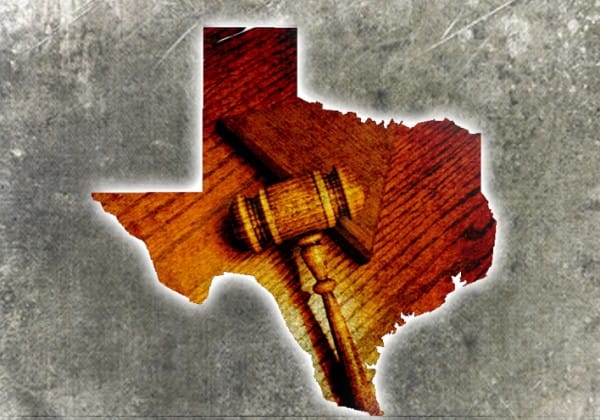
The 2010 U.S. Census showed that the population of Texas grew by over 4.2 million since the last census in 2000. That is a 20.6% increase over ten years. As a result, the state picked up four additional seats in the U.S. House of Representatives. With those added seats, there are now a total of 36 congressional districts in Texas.
It was the responsibility of the 82nd Texas Legislature in 2011 to redraw the state’s political maps in order to fit in the new congressional districts as well as reshape state House and Senate districts. No one should be shocked that the Republican super-majority was going to shape the political landscape to ensure that these new seats went to the GOP. The practice is commonly referred to as gerrymandering.
Republicans in the state reshaped the federal and state legislative districts to ensure their party had the advantage in future elections. However, it wasn’t merely about gaining or keeping seats that could potentially go to a Democratic candidate.
There are plenty of districts where Hispanic voters make up a significant percentage of the population. According to the 2010 U.S. Census, the Hispanic population makes up roughly 38% of the total population in Texas. This number has likely increased to some degree in the last two years. The growth in the Hispanic and Latino populations rose by 41.8% in the last decade and made up an overwhelming majority of the total growth in the state. Approximately 43% of this population demographic is eligible to vote.
Federal and state electoral districts that have a heavy Hispanic population are likely to go blue in any given election. This voting bloc tends to lean towards the Democratic Party. So, if the GOP has a super-majority in the state legislature it is not a stretch of the imagination to conclude that they would draw up redistricting plans to suppress this vote in an attempt to keep their majority.
The U.S. District Court in Washington ruled on Tuesday that the three redistricting maps presented to the court by Texas officials intentionally discriminate against certain voting demographics, specifically minority groups. The court concluded that the state couldn't prove that the redrawn districts didn't infringe on the rights of Hispanic and black constituents to choose candidates that best represent them.
Judge Thomas Griffith wrote a 154-page opinion, in which the court specifically points out electoral districts that violate the Voting Rights Act of 1965. The opinion was so long because this included several state House districts and the court specifically pointed out two congressional districts. The three-judge panel concluded that the redistricting plans could not be granted preclearance.
The vote on the new political maps during the 2011 legislative session fell on partisan lines and so has the reaction to the court’s ruling. Texas Attorney General Greg Abbott immediately promised to appeal the decision to the U.S. Supreme Court (SCOTUS). Republican leaders in the state have reacted with contempt while Texas Democrats have responded with praise.
The hearing began back in November and while the judges deliberated, a federal court in San Antonio drew interim redistricting maps that were used in the Texas primaries and will likely be used in the general election in November. However, the fate of electoral districts in Texas is uncertain for future elections while the current political maps are held up in appeals
Texas has been in federal court over two matters this year concerning changes to state voting laws. State officials opted to take the redistricting maps drawn by state lawmakers to a federal appeals court instead of seeking preclearance through the U.S. Department of Justice (DOJ). The state’s chances were better in court than with the DOJ, but it was also the more costly route.
The Obama administration blocked a voter ID law back in March that was also passed by the 82nd Texas Legislature. They argued the law infringes on voting rights for thousands of potential voters in the state. This includes voters in minority groups and elderly citizens that may not have state-issued identification of some kind. Texas sued the DOJ and the matter was brought before a federal court.
Lawmakers in Texas argue the voter ID law is meant to prevent voter fraud and protect the voting rights of eligible voters in the state. However, they were unable to provide the court with one legitimate case of the type of voter fraud the law is meant to stop. The court’s decision on the matter is expected as early as next week. Regardless of the outcome, an appeal to SCOTUS is expected in this case as well.