Skip to content
Sign up free
News

America Then & Now: 1790 Census to 2010 [INFOGRAPHIC]

America Then & Now: 1790 Census to 2010 [INFOGRAPHIC]

By Faith Eischen

2-minute read

1790-census

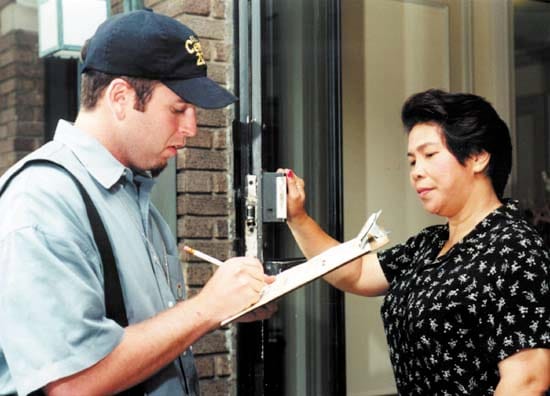
July 4th, 2012 marks the United States’ 236th birthday. Although still a relatively young nation, the U.S. has transformed into an influential world power with a large and diverse population. The implementations of Decennial Censuses were included into the Constitution to acquire the enumeration of the American people every ten years, to be used for apportionment of seats in the House of Representatives among the states. They also have proven to be a great way to mark the constant changing U.S. population.

The first census of the United States shares no resemblance to the most recent census of our country. But nonetheless the contrast between the 1790 and 2010 censuses helps capture the dynamic transformation of our country and helps us to remember the United States’ beginnings.

Here are some interesting differences between the first and last censuses in regards to the enumeration of data and the results.

The 1790 Census began a year after President George Washington was inaugurated. It included the original 13 states as well as the districts of Kentucky, Maine, and Vermont, and the Southwest Territory (now Tennessee). The Enumeration involved six inquiries concerning the head of the family and the number of persons in each household of the following descriptions:

  • Free White males of 16 years and upward (to assess the country's industrial and military potential)
  • Free White males under 16 years
  • Free White females
  • All other free persons
  • Slaves

Overall, the national population at the time was 3.9 million. Both George Washington and Thomas Jefferson were surprised by the results because they had expected a higher number of inhabitants.

The 2010 Census marked the 23rd census in United States history. It consisted of only 10 questions for all households in the U.S. and Island Areas related to name, gender, age, race, ethnicity, relationship and whether the inhabitants homes were owned or rented. This census was thus one of the shortest in American history. The census marked another historic feat by announcing it would count same-sex married couples as a part of its data in June 2009.

The overall National population for the United States’ was 308,745,538.

Here is a breakdown of the 2010 national population by race:

  • Caucasian alone: 72.4%
  • Black or African American alone: 12.6%
  • American Indian and Alaska Native alone: 0.9%
  • Asian alone: 4.8%
  • Native Hawaiian/Pacific Islander alone: 0.2%
  • Some Other race alone: 6.2%
  • Two or more races alone: 2.9%
1790-census
Tags: News

Adhere to the IVN etiquette

By posting a comment, you agree to adhere to our etiquette rules: No partisan attacks, no personal attacks, substantiate your sources, no self-promotion.

Get IVN’s Free Weekly Newsletter:Get IVN’s Free Newsletter

Get IVN’s Free Weekly Newsletter:Get IVN’s Free Newsletter

Nonpartisan Issues. Diverse Perspectives.

Check your inbox and click the link to confirm.

Republish this article

Republishing guidelines

Republish IVN articles for free. Independent Voter News articles may be republished online or in print under a Creative Commons BY-NC-ND 4.0 license, on these terms:

  1. Credit the author and IVN. Keep the byline ("By Author Name, Independent Voter News") and the attribution note at the end, which links to the original.
  2. Keep the meaning. You may update time and place references and apply your house style. You may trim for length, as long as the cuts don't change the meaning or misrepresent the author. Keep the headline. Mark any additions as your own (for example "Additional reporting by ...").
  3. Translations are welcome. Translate faithfully, add "Translated from English by [your outlet]", and tell us at editor@ivn.us.
  4. Keep the links, including the link to the original article.
  5. Keep the tracking image. The HTML includes a 1-pixel image that counts readers on your page. It collects no personal information.
  6. Photos and illustrations. Images credited to IVN may be used with this article only. Images credited to others (AP, Getty, Unsplash, Wikimedia and so on) stay under their owners' terms. Secure the rights or switch "Include images" off.
  7. Don't sell it. You can't sell our articles or sell ads specifically against them. Your normal site advertising is fine.
  8. No implied endorsement. Don't suggest that IVN or the author endorses you, your candidates or your causes, or that donations to you support IVN.
  9. Keep labels. Opinion or analysis pieces keep that label.
  10. Point search engines to the original. Set the canonical URL of your copy to the original IVN article (the HTML we give you includes the tag).
  11. No bulk or automated republishing, and don't submit our articles to aggregators (Apple News, Google News, MSN) as your own.
  12. Corrections and removals. Update your copy when we correct it, and remove it promptly if we ask. We'll contact you at the email you give us.
  13. Questions or print republication: editor@ivn.us.

IVN staff: fill in who you're inviting above, then create the invite.

Preparing the article

America Then & Now: 1790 Census to 2010 [INFOGRAPHIC]

Choose a format
  • HTML
  • Email HTML
  • Markdown
  • Formatted (.docx)
  • Plain text
  • WordPress blocks
  • PDF
Choose a platform

Photos credited to others need their owners' permission.

To for

Republishing somewhere else? Questions? editor@ivn.us