
Credit: wikimedia.org
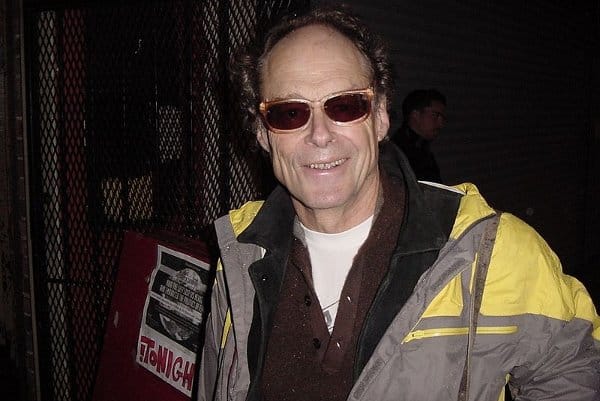
On Saturday, I was shocked to learn that Alexander Cockburn, founder of the influential hard left political website Counterpunch, had died of cancer. Despite my disagreement with him on subjects like global warming and Occupy, I respected his intellectual independence. Cockburn rightly pilliored the emphasis that some on the left place upon hostility towards religion, correctly observing that the US is one of the most Christian countries in the world. You aren't going to persuade many Americans to politically support you, he observed drily, by attacking Christianity.
More importantly, he understood that both liberalism and the organized left had lost political influence that they possessed long ago. Perhaps because of his close contact with direct action environmental protest movements on the West Coast, as personified through the efforts of people like Judi Bari, Darryl Cherney and Julia Butterfly, among others, he recognized the emergence of an anti-authoritarian left that integrated environmentalism with anti-capitalism. Living on the Lost Coast in Petrolia, he watched it happen right before his eyes.
Accordingly, Cockburn wasn't surprised at the eruption of confrontational protests against the WTO in Seattle on N30 in 1998, protests that he covered personally. And, because of his lack of surprise, he properly identified, in a compelling article entitled Seattle Diary, the flash points of contention that evolved out of it. He criticized the AFL-CIO for diverting a large march away from the downtown where locked down protesters were being tear gassed and pepper-sprayed by the Seattle police. Fearful of embarrassing President Clinton, who was scheduled to attend the meeting the following day, the AFL-CIO refused to come to the assistance of people in the streets who were fighting on its behalf against the neoliberal policies of the WTO.
It was a classic instance of US labor unions serving in the role of mediating protest for the benefit of capital. In this, the AFL-CIO response to the street protests in Seattle prefigured the recent health care reform debacle where, after a similarly illusory campaign of opposition, it accepted a horrible program in return for a short-term carve out from a tax upon purported high cost health plans.
Cockburn also recognized the same tendency among NGOs that claim to oppose the reorganization of the global economy for the benefit of capital. He rightly criticized Global Exchange, and one of its founders, Medea Benjamin, for intervening on behalf of the police to protect Niketown, the Gap and McDonald's, from attack by angry crowds. Benjamin even went so far as to say that the people involved should have been arrested. Cockburn, upon being challenged by Benjamin's husband, Kevin Danaher, exposed them, like the leadership of the AFL-CIO, as being noteworthy for wanting a dialogue with the WTO while the protesters wanted to shut it down. Hence, Global Exchange was willing to assist the police in stopping the attacks because it impaired its prospects of serving as a self-selected intermediary between the anti-globalization movement, the WTO and the Clinton White House.
It is one thing to argue that the left is not well served by instances of property destruction, as many in Occupy have done, and quite another to publicly state that those involved should be arrested. Just as the AFL-CIO was willing to serve in the role of ensuring that its members did not participate in unsanctioned protest that threatened its political and corporate relationships, Global Exchange attempted to fulfill a similar function in relation those involved in direct action.
For me, Cockburn's coverage of the N30 protests in Seattle was a seminal event, because it revealed a world of activism that I didn't know existed, or, if I did, seemed remote. At that time, I lived in a UC college town, Davis, California, where the boundaries of acceptable activism where dictated by the local Democratic Party apparatus, which was, of course, Clintonophile through and through. Cockburn intellectually legitimized the increasing centrality of anti-authoritarian activism, an activism that would be in the forefront of resistance to the so-called War on Terror post-9/11, as most brutally manifested by the invasions and occupations of Iraq and Afghanistan, and, more recently, in the Occupy movement.
Like Tariq Ali, he insisted, despite criticism, upon the urgency of the creation of a broad based anti-imperialist effort that included the libertarian right. For both, saving the lives of people in the Middle East and Central Asia took precedence over the primacy of ideological consistency. The libertarian site antiwar.com periodically reposted his articles, and Justin Raimondo, the founder of the site, posted a heartfelt obituary. Cockburn understood that while, in the long term, the interests of anti-authoritarians and libertarians were at odds, they were congruent on the essential, contemporary question of US imperialism. Not surprisingly, liberals have taken the opposite stance, with the result that the interminable War on Terror proceeds with little restraint.
Curiously, in one of his last articles, Cockburn posted a valedictory for Occupy. In it, he seems to have implicitly undergone a last minute conversion to an orthodox Leninism. For this, and other reasons, Louis Proyect found it objectionable, and while many of his criticisms are legitimate, he fails to recognize that Cockburn was saying a lot of the same things that sympathetic Marxists like Pham Binh have already said, especially in relation to the distortions created by the primacy of 24/7 activists and its opaque decision making processes. Cockburn was especially sharp in his critique of the fetishization of social networking technology among some in Occupy, something that I had already expressed ambivalence about this in a post on my blog several months ago. My sense is that Cockburn may have again said the unmentionable, that Occupy is dead as we know it. He will not, however, live to discover whether the social conditions that gave rise to it will persist, if not intensify, resulting in future variations of like-minded anti-capitalist resistance.
(This was excerpted from American Leftist)