
Credit: U.S. News & World Report

As the world becomes more economically interconnected, foreign policy should be seen as increasingly important by American voters.
Independents have a particularly unique challenge when it comes to finding a politician with similar views on global issues. With one poll showing that over 20% of independents see themselves as libertarians, the temptation is to treat leaders like Ron Paul as spokesmen for independents on international affairs.
However, over 64% of independents support the use of U.S. military forces to stop "massive human rights abuses", a view that Paul would almost certainly oppose. In fact, Arch Puddington of Freedom House wrote the following about Ron Paul and global human rights issues:
"That someone with such a cartoonish view of American actions over the recent decades commands the respect of thousands is worrying in itself. It is also curious that although he publicly invokes his passion for individual liberty, Paul seldom pays tribute to the men and women of other countries who are defying the odds in their efforts to build free society."
Ron Paul's isolationist foreign policy views may agree with independents who see themselves as libertarians, but they are certainly out of step with many more.
Well, if Ron Paul is not an adequate representative of independent views about the world, then what about Angus King, the independent senator from Maine? King, with his centrism on domestic issues, is a standard-bearer for many independents, over 43% of whom consider themselves as "moderate."
And yet, the senator from Maine disagrees with the overwhelming majority of independents on the issue of military aid to Syrian rebels. Kevin Miller of the Portland Press Herald wrote about King's recent trip to the Middle East, and reported the following:
"King said he was uneasy with the Obama administration's recent decision to begin sending 'lethal aid' to Syrian rebels. But he said he was convinced, after meeting with people during the trip, that providing military support is necessary to keep the Assad regime from defeating the rebels."
Independents believe something between Ron Paul's radical isolationism and Angus King's new-found interventionism. According to a 2012 YouGov survey, independents are more aware of American treaties with South Korea, Japan, and Taiwan than their Republican and Democratic counterparts.
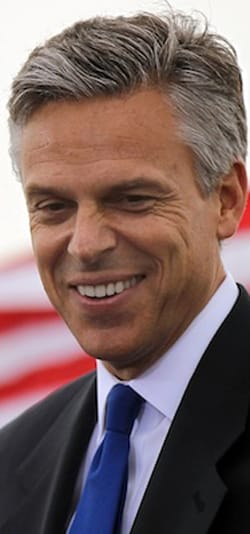
This suggests that the East Asia region is an area of particular interest for independents. As far as China is concerned, 35.8% of independents somewhat or strongly believe that relations between the U.S. and that country will deteriorate in the next twenty years. Only 21.9% think that the relationship will improve. The most logical conclusion is that political independents see East Asia as an area of both great importance and great concern. John Huntsman // Credit: Death and Taxes Mag
When it comes to America's role in the world, independents certainly display a non-interventionist streak, yet still avoid libertarian isolationism. For example, most independents would not feel threatened if Germany developed its own nuclear weapons. An overwhelming 65.6% of independents also believe that America's European allies spend less on defense than they should because of U.S. military support. Only 30.8% of independents believe that an American presence in the Middle East is necessary to keep oil and gas prices low.
And almost 68% of independents think that U.S. support of Israel increases the likelihood of terrorist attacks against America. Consider all of these numbers together, and a consistently pragmatic foreign policy appears. Independents are not as impressed with military might as they are with economic strength. In fact, 51% of politically unaffiliated respondents said that a country's influence in the world is most impacted by economic size.
Only 21.5% said the same for military strength and global influence. Independents are interested in scaling back the American role in the world, particularly with regard to the U.S. military.
Believe it or not, there is a politician who shares many of these independent views. His name is Jon Huntsman. His experience in foreign policy is primarily in East Asia, where he served as the U.S. ambassador to China. As previously mentioned, the region might be an area of special interest for independents. Huntsman, an early GOP primary drop-out, offered a more realistic approach to American "retrenchment", as opposed to Ron Paul-style isolationism.
Ben Adler of The Nation wrote that "Huntsman asks the right questions about U.S. military policy." Most importantly, Jon Huntsman is a moderate, which aligns him with the aforementioned 43% of independents. Perhaps the centrist foreign policy vision of Mr. Huntsman offers independents an alternative way of addressing an ever-challenging area of American politics.