Skip to content
Sign up free
News

Anti-Semitic Tweets Test Limitations of Free Speech on Twitter

Anti-Semitic Tweets Test Limitations of Free Speech on Twitter

By Jane Susskind

2-minute read

free speech on Twitter

Annette Shaff / Shutterstock.com

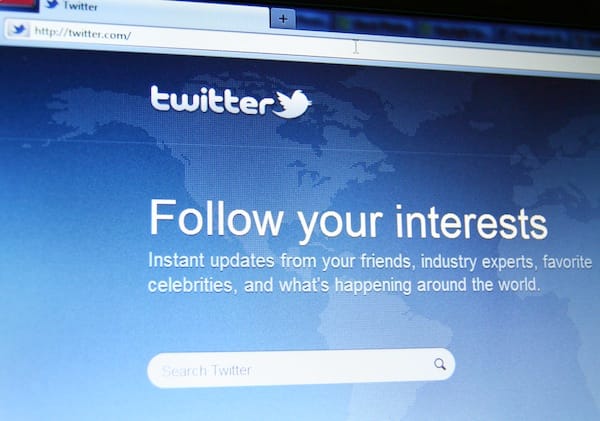
Twitter has time and time again affirmed its commitment to free speech on the social network, boldly citing its belief in the open exchange of information and dedication to an open and safe Internet.

In their January 2013 Twitter Transparency Report, Twitter's legal policy manager Jeremy Kessel expressly stated that government requests for user information "can have a serious chilling effect on free expression – and real privacy implications."

For the American company, Twitter is a bastion of the principles of free speech and freedom of expression.

However, after repeatedly denying French authorities data linked to racist and anti-Semitic tweets, Twitter has complied with French law and has handed over the information needed to identify these users.

The saga began in October 2012 when the hashtag #unbonjuif, or “a good Jew,” caught wind in France and the social networking site was populated with hate speech in clear violation of French law.

In January, Twitter was ordered by a French court to reveal the identities of those spreading hate speech on the social network, with French minister Najat Vallaud-Belkacem weighing in on the necessity of Twitter to comply with the country's effort to thwart hate speech.

Twitter, refusing to relinquish the data, appealed the decision, but lost. Last week, Twitter and France's Union of Jewish Students (UEJF) -- one of the organizations pushing for stricter regulations on Twitter -- reached an agreement in which Twitter consented to work with the French authorities in identifying users involved in anti-semitic behavior on the network:

"This agreement is a reminder that you cannot do anything you want on the Internet. Twitter will no longer be a conduit for racists and anti-Semites where their anonymity will be protected," UEJF President Jonathan Hayoun said.

While the decision is "a great victory in the fight against racism and anti-Semitism" for Hayoun, it leaves  Twitter's position on free speech and Internet freedom unclear. Information provided by Twitter reveals that as of last year, Twitter had received 12 information requests from French authorities and had complied with zero of them.

Furthermore, as of last year, Twitter had only 63 percent of all information requests, specifying that they have never carried out requests to outright censor tweets.

For a company that places an emphasis on values of free speech and Internet openness, it seems that last week's joint decision was somewhat of a defeat for Twitter in their ongoing efforts to balance free speech and foreign hate speech laws.

The question still remains: Is it ever okay to censor speech on Twitter?

Tags: News

Adhere to the IVN etiquette

By posting a comment, you agree to adhere to our etiquette rules: No partisan attacks, no personal attacks, substantiate your sources, no self-promotion.

Get IVN’s Free Weekly Newsletter:Get IVN’s Free Newsletter

Get IVN’s Free Weekly Newsletter:Get IVN’s Free Newsletter

Nonpartisan Issues. Diverse Perspectives.

Check your inbox and click the link to confirm.

Republish this article

Republishing guidelines

Republish IVN articles for free. Independent Voter News articles may be republished online or in print under a Creative Commons BY-NC-ND 4.0 license, on these terms:

  1. Credit the author and IVN. Keep the byline ("By Author Name, Independent Voter News") and the attribution note at the end, which links to the original.
  2. Keep the meaning. You may update time and place references and apply your house style. You may trim for length, as long as the cuts don't change the meaning or misrepresent the author. Keep the headline. Mark any additions as your own (for example "Additional reporting by ...").
  3. Translations are welcome. Translate faithfully, add "Translated from English by [your outlet]", and tell us at editor@ivn.us.
  4. Keep the links, including the link to the original article.
  5. Keep the tracking image. The HTML includes a 1-pixel image that counts readers on your page. It collects no personal information.
  6. Photos and illustrations. Images credited to IVN may be used with this article only. Images credited to others (AP, Getty, Unsplash, Wikimedia and so on) stay under their owners' terms. Secure the rights or switch "Include images" off.
  7. Don't sell it. You can't sell our articles or sell ads specifically against them. Your normal site advertising is fine.
  8. No implied endorsement. Don't suggest that IVN or the author endorses you, your candidates or your causes, or that donations to you support IVN.
  9. Keep labels. Opinion or analysis pieces keep that label.
  10. Point search engines to the original. Set the canonical URL of your copy to the original IVN article (the HTML we give you includes the tag).
  11. No bulk or automated republishing, and don't submit our articles to aggregators (Apple News, Google News, MSN) as your own.
  12. Corrections and removals. Update your copy when we correct it, and remove it promptly if we ask. We'll contact you at the email you give us.
  13. Questions or print republication: editor@ivn.us.

IVN staff: fill in who you're inviting above, then create the invite.

Preparing the article

Anti-Semitic Tweets Test Limitations of Free Speech on Twitter

Choose a format
  • HTML
  • Email HTML
  • Markdown
  • Formatted (.docx)
  • Plain text
  • WordPress blocks
  • PDF
Choose a platform

Photos credited to others need their owners' permission.

To for

Republishing somewhere else? Questions? editor@ivn.us