Skip to content
Sign up free
News

Ballet on the Spectrum Gives Autistic Children a Chance to Dance

Ballet on the Spectrum Gives Autistic Children a Chance to Dance

By Cassidy Noblejas Bartolomei

2-minute read

Credit: Music and the Mirror Balletcenter West
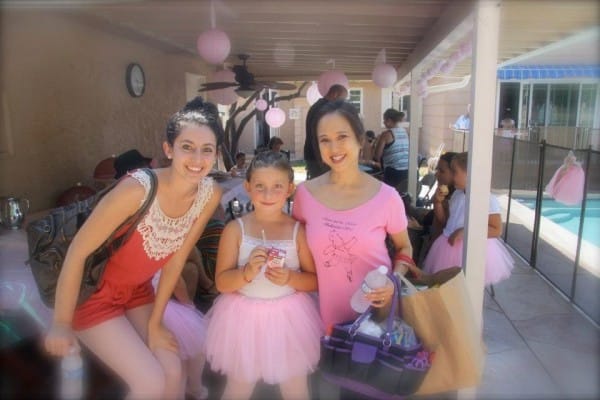
Located on West Lewis Street in picturesque Mission Hills, Music and the Mirror Balletcenter West has offered ballet classes for three year-olds through adults since 1997. Director and owner Michelle Bartolomei is esteemed throughout the neighborhood for her excellent instructing techniques and her ability to teach any person at any age the art of dance. In 2011 Michelle proved the extent of her abilities and dedication when she added Ballet on the Spectrum, a ballet class for those with autism, to the classes she offers.

Michelle’s boutique-styled studio offers children and adults dance programs to increase technical ballet skill and stamina; with an emphasis on developing technique, placement, and style. The studio welcomes young students who aspire to be dancers and has had alumni of the program accepted into the prestigious academies of School of American Ballet, American Ballet Theatre, Miami City Ballet, Pacific Northwest Ballet, JKO School, Washington Ballet, Houston Ballet, Joffrey Ballet, Manhattan Young Ballet , and others. Along with the dedication to train professional dancers, the studio acknowledges that not every student is pursuing a career in dance. But, each class demands concentration and discipline from all students to teach them qualities that will serve them throughout their lives.

Since Ballet on the Spectrum began, Music and the Mirror Balletcenter West has offered a new kind of program focused on engaging those diagnosed with autism. After Michelle’s daughter was diagnosed, she decided to reach out to others with children of similar mental and physical variations.

“I have taught children for 25 years. When my daughter was diagnosed with autism, my goal was to have her be able to enjoy the beauty and benefits of ballet that I have shared with others. I have designed a class which enables her and others like her to open their minds and their hearts through the grace and expression of dancing.”

The program is offered to children from ages 4 and up, and encourages autistic dancers to have fun and exercise with music and movement. BOTS uses teaching techniques Michelle developed through her years of experience with special education classes. The techniques are geared toward improving each student’s gross motor skills and enhancing their nonverbal expression. The program also uses the help of volunteers, mostly teen-age students enrolled at the studio, to facilitate the classes and serve as “shadows” for each child.

The director recalls that the highlight of the BOTS program was the annual summer recital in which the children were able to experience the joy of performing before an audience. During their performance the house lights were turned up, the stage lights were turned down, and the music was quieted to accommodate their more sensitive sensory perceptions. By the end of the piece, Michelle explains, “The audience, as well as the dancers backstage, were in tears. It was truly a joyful experience!”

Tags: News

Adhere to the IVN etiquette

By posting a comment, you agree to adhere to our etiquette rules: No partisan attacks, no personal attacks, substantiate your sources, no self-promotion.

Get IVN’s Free Weekly Newsletter:Get IVN’s Free Newsletter

Get IVN’s Free Weekly Newsletter:Get IVN’s Free Newsletter

Nonpartisan Issues. Diverse Perspectives.

Check your inbox and click the link to confirm.

Republish this article

Republishing guidelines

Republish IVN articles for free. Independent Voter News articles may be republished online or in print under a Creative Commons BY-NC-ND 4.0 license, on these terms:

  1. Credit the author and IVN. Keep the byline ("By Author Name, Independent Voter News") and the attribution note at the end, which links to the original.
  2. Keep the meaning. You may update time and place references and apply your house style. You may trim for length, as long as the cuts don't change the meaning or misrepresent the author. Keep the headline. Mark any additions as your own (for example "Additional reporting by ...").
  3. Translations are welcome. Translate faithfully, add "Translated from English by [your outlet]", and tell us at editor@ivn.us.
  4. Keep the links, including the link to the original article.
  5. Keep the tracking image. The HTML includes a 1-pixel image that counts readers on your page. It collects no personal information.
  6. Photos and illustrations. Images credited to IVN may be used with this article only. Images credited to others (AP, Getty, Unsplash, Wikimedia and so on) stay under their owners' terms. Secure the rights or switch "Include images" off.
  7. Don't sell it. You can't sell our articles or sell ads specifically against them. Your normal site advertising is fine.
  8. No implied endorsement. Don't suggest that IVN or the author endorses you, your candidates or your causes, or that donations to you support IVN.
  9. Keep labels. Opinion or analysis pieces keep that label.
  10. Point search engines to the original. Set the canonical URL of your copy to the original IVN article (the HTML we give you includes the tag).
  11. No bulk or automated republishing, and don't submit our articles to aggregators (Apple News, Google News, MSN) as your own.
  12. Corrections and removals. Update your copy when we correct it, and remove it promptly if we ask. We'll contact you at the email you give us.
  13. Questions or print republication: editor@ivn.us.

IVN staff: fill in who you're inviting above, then create the invite.

Preparing the article

Ballet on the Spectrum Gives Autistic Children a Chance to Dance

Choose a format
  • HTML
  • Email HTML
  • Markdown
  • Formatted (.docx)
  • Plain text
  • WordPress blocks
  • PDF
Choose a platform

Photos credited to others need their owners' permission.

To for

Republishing somewhere else? Questions? editor@ivn.us