
Photo: Wikimedia Commons / Author: "AgnosticPreachersKid"
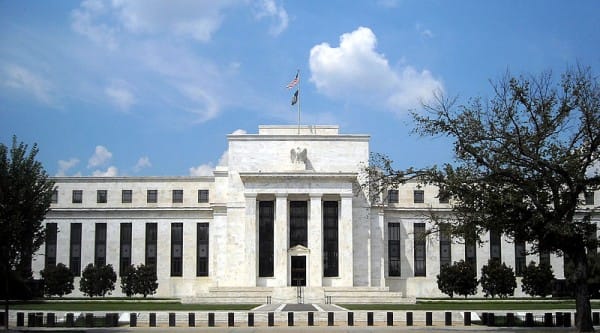
Ben Bernanke's recent decision to launch the third wave of quantitative easing for an indefinite period has triggered a fierce debate among policymakers.
Citing an unemployment rate of 8.1% that has seen little change since the beginning of the year and according to Bernanke, "is well above normal levels," the Fed chairman stated Thursday the new plan to purchase agency mortgage backed securities at a pace of $40 billion a month, "should put downward pressure on longer-term interest rates, support mortgage markets, and help to make broader financial conditions more accommodative."
The Fed made its first purchases Friday and is planning to purchase a total of $23 billion for the remainder of the month. Bernanke intends to continue to keep short-term interest rates at "exceptionally low levels" until the middle of 2015, approximately half a year longer than previously anticipated. The low interest rates are intended to induce an increase in lending to businesses and an increase in consumer spending-- and thereby create an increase in hiring for new jobs.
Not surprisingly, the Fed's controversial decision has drawn its share of supporters and critics, who spent the weekend making arguments for and against QE3.
From the Huffington Post, Harlen Green writes:
"We can already see the results of QE3 in the plunge of both short and long term Treasury rates, as well as the rise in the euro to 1.32 to the dollar in just one day. It will make U.S. products cheaper all around, and European products more expensive, thus boosting U.S. exports and manufacturing."
Not everyone, however, is convinced another round of quantitative easing will prove to be beneficial. The Daily Caller's J. Keith Johnson reports 2011 income levels to be below that of the late 1960s and early '70s. Channeling the words of perhaps Bernanke's fiercest critic, Texas Congressman Ron Paul, Johnson writes:
"The net result of the open-ended QE will be higher prices across the board. Oil spiked immediately upon today’s announcement, along with everything else. Higher oil prices result in higher gas prices, which result in higher costs to get your food to the market and more expense for you to get to work. Whose economy is this stimulating?"
But according to a speech given by Bernanke at last month's banking conference in Jackson Hole, Wyoming, inflation shouldn't be a concern. Dismissing any objections to launching QE3, Bernanke reiterated his concern for the unemployment numbers saying:
"The stagnation of the labor market in particular is a grave concern not only because of the enormous suffering and waste of human talent it entails, but also because persistently high levels of unemployment will wreak structural damage on our economy that could last for many years."
As is to be expected, longtime critics of the Fed's policies such as Euro Pacific Capital CEO Peter Schiff, are less than optimistic about the Federal Open Market Committee and Bernanke's decision to move forward with QE3. Calling it "kamikaze monetary policy," Schiff told CNBC:
“What we actually need is less money printing... we need higher interest rates, more savings, more production, more exports and what the Fed is doing is inhibiting that from happening."
Advocates of tighter monetary policy pointed to China's recent shift from selling oil in US dollars to the Yuan as an indicator of the Fed's failed policies and the global implications of QE3.
Despite the dire warnings of Bernanke's critics, some are hopeful, at least in the long-run, of the effects of QE3. Though not convinced it will prove to be a cure-all, Bill Conerly of Forbes.com is confident more quantitative easing will produce some economic strength saying, "if you set your expectations low enough, you won't be disappointed."
Economist Paul Krugman is even more enthusiastic regarding continuing the Fed's current monetary policy. He even criticizes QE3 for not doing enough. Standing diametrically opposed to Peter Schiff and other Fed critics, Krugman stated recently, "The change in tone is important but I would have liked a more stronger [sic] statement...It leaves things a bit unclear," according to Bloomberg.
Though there may be much debate over the viability of the Fed's policy of monetary expansion, from Bernanke's decision to launch QE3 indefinitely, to Peter Schiff's frightening predictions, there seems to be a consensus that an economic recovery will not be occurring anytime soon.