
Your Facebook Like is now legally protected speech Photo: Mashable
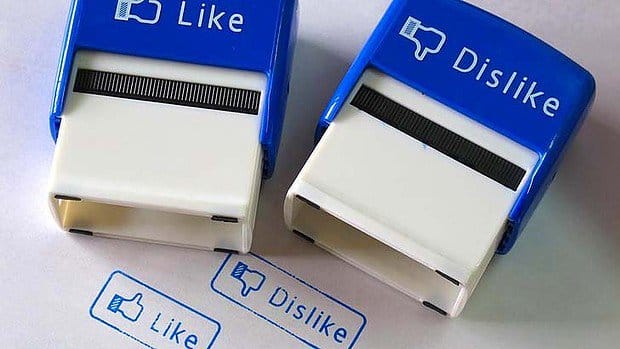
Whether you "like" it or not, Facebook "likes" are considered to be a vital component of free speech protected under the First Amendment, a U.S. appeals court holds.
The decision reverses a lower court ruling that Facebook likes are not "actual statements," ruling in favor of a former Virginia deputy sheriff who claimed he had lost his job over "liking" his boss' opponent on Facebook during the 2009 city sheriff race.
But, is clicking a button really an expression of a person's opinion? When that button indicates your support for a political candidate or idea, yes, U.S. Circuit Judge William Traxler confirms, equatingthe online practice of "liking" a political candidate's page to the offline activity of displaying a yard sign.
“Liking a political candidate’s campaign page communicates the user’s approval of the candidate and supports the campaign by associating the user with it…It is the Internet equivalent of displaying a political sign in one’s front yard, which the Supreme Court has held is substantive speech," Traxler wrote.
As established in the 1994 Supreme Court case City of Ladue v. Gilleo, "displaying a sign from one’s own residence often carries a message quite distinct from placing the sign someplace else, or conveying the same text or picture by other means."
Just as yard signs represent a "cheap and convenient form of communication," Facebook likes act as a badge of approval, the collection of which creates a unique profile to which a Facebook user chooses to identify with. It is a form of self-expression, one which should be equally protected on and offline.
We live in a digital age. In 2012, Americans spent 121 billion minutes on social media sites in just one month -- that's 6.5 hours per person. And while some online users are shying away from Facebook, it still tops the list of social media sites, with 1.15 billion users.
Why then have lawmakers been so slow in responding to the demands of social media users in areas such as free speech and privacy? Racked with uncertainty, lawmakers simply aren't experts on the evolving world of the Internet:
"Uncertainty on how to best apply our rights to the Internet and enforce that they are protected has led to inaction, allowing for the rise of unconstitutional datamining, with Facebook now owning (and selling) the most extensive set of online data of consumers worldwide."
While the legal system still has some catching up to do when it comes to adapting to our increasingly tech-oriented society, this decision expands the scope of the First Amendment, inching one step closer to the incorporation of all the nuances of digital communication into our constitutional interpretation.
--
Related: 6 Articles on Social Media & Free Speech
Freedom of Speech on Facebook at Odds with Community Respect
Why There Will Always be Hate Speech on Facebook
Michigan Court Tests Limits on Free Speech on Facebook
French Twitter Ruling Demands Names of Racist Tweeters
Anti-Semitic Tweets Test Limitations of Free Speech on Twitter
In Turkey, The Revolution Will Not Be Televised, It Will Be Tweeted