Skip to content
Sign up free
News

Counterfeiting in the Gold Market Very Rare, Experts Say

Counterfeiting in the Gold Market Very Rare, Experts Say

By Thomas G Brown

2-minute read

Credit: commodityonline.com
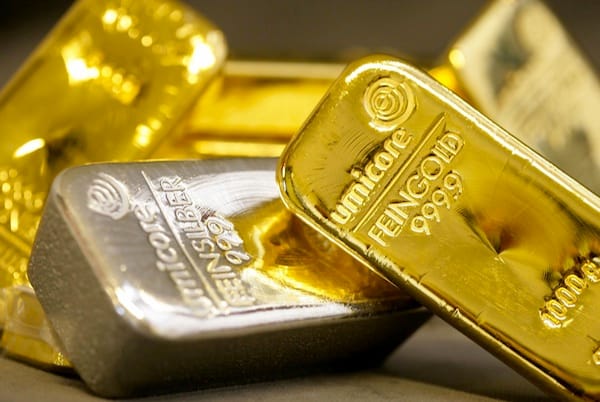
A news story that appeared in the New York Post reported that a dealer in New York City's diamond district unknowingly acquired phony gold bars. The dealer later discovered that at least ten bars of gold he purchased were counterfeit. The bars had just a gold coating on the outside with the majority of the bar being tungsten.

A gold dealer named Ibrahim Fadl, the man who received these fake gold bars, stated in the report how they came into his possession:

"Fadl, a Columbia University graduate with a master’s degree in chemical engineering, and who has more than 40 years in the industry, purchased the four fake bars from a well-known Russian salesman with whom he has done business."

The counterfeiter buys a legitimate gold bar from a well known gold mint. They then take the bar, slice it in half, and hollow out the inside. A tungsten ingot, which is similar in weight, is placed into the center of the bar. It is then put back together and then sold as pure gold. This type of counterfeiting takes a huge upfront investment as the counterfeiter has to purchase real gold bars. In addition, a significant amount of skill is needed to fool anyone who has been in this market as long as Mr. Fadl has.

However, this type of story is not new. Last year, Congressman Ron Paul, who chairs the House Subcommittee on Domestic Monetary Policy, requested an audit of Fort Knox in Kentucky. The request was in response to a story that a huge shipment of gold bars that were delivered to China turned out to be fake. The story could not be verified and is considered an Internet rumor. In March, a poorly constructed fake, reported by ABC Bullion, was quickly detected because the bar was discovered to be underweight.

So, how prevalent is the issue of counterfeiting in the gold market and what can buyers do to protect themselves?

Detailed research on the matter and people with extensive experience in the gold market can reassure buyers and people looking to invest in the market that such counterfeiting practices are not that common. An essay written by Bron Suchecki, from the respected Perth Mint in Australia, puts together a good argument that these incidents are exceedingly rare. Mr. Suckecki points out that gold bars are melted quite frequently to make jewelry, coins, and new bars. Therefore, a large scale operation would be easily detected.

In addition, if buyers are dealing with a reputable dealer or directly with a mint they should have little to worry about. If people looking to get into the market read the entire story about the gold bars Mr. Fadl purchased, he mentioned that the dealer offered him a huge discount when gold prices are on the rise. This should have been a huge red flag for Fadl, but he decided against his better judgement and made the purchase only to verify what he suspected later.

Tags: News

Adhere to the IVN etiquette

By posting a comment, you agree to adhere to our etiquette rules: No partisan attacks, no personal attacks, substantiate your sources, no self-promotion.

Get IVN’s Free Weekly Newsletter:Get IVN’s Free Newsletter

Get IVN’s Free Weekly Newsletter:Get IVN’s Free Newsletter

Nonpartisan Issues. Diverse Perspectives.

Check your inbox and click the link to confirm.

Republish this article

Republishing guidelines

Republish IVN articles for free. Independent Voter News articles may be republished online or in print under a Creative Commons BY-NC-ND 4.0 license, on these terms:

  1. Credit the author and IVN. Keep the byline ("By Author Name, Independent Voter News") and the attribution note at the end, which links to the original.
  2. Keep the meaning. You may update time and place references and apply your house style. You may trim for length, as long as the cuts don't change the meaning or misrepresent the author. Keep the headline. Mark any additions as your own (for example "Additional reporting by ...").
  3. Translations are welcome. Translate faithfully, add "Translated from English by [your outlet]", and tell us at editor@ivn.us.
  4. Keep the links, including the link to the original article.
  5. Keep the tracking image. The HTML includes a 1-pixel image that counts readers on your page. It collects no personal information.
  6. Photos and illustrations. Images credited to IVN may be used with this article only. Images credited to others (AP, Getty, Unsplash, Wikimedia and so on) stay under their owners' terms. Secure the rights or switch "Include images" off.
  7. Don't sell it. You can't sell our articles or sell ads specifically against them. Your normal site advertising is fine.
  8. No implied endorsement. Don't suggest that IVN or the author endorses you, your candidates or your causes, or that donations to you support IVN.
  9. Keep labels. Opinion or analysis pieces keep that label.
  10. Point search engines to the original. Set the canonical URL of your copy to the original IVN article (the HTML we give you includes the tag).
  11. No bulk or automated republishing, and don't submit our articles to aggregators (Apple News, Google News, MSN) as your own.
  12. Corrections and removals. Update your copy when we correct it, and remove it promptly if we ask. We'll contact you at the email you give us.
  13. Questions or print republication: editor@ivn.us.

IVN staff: fill in who you're inviting above, then create the invite.

Preparing the article

Counterfeiting in the Gold Market Very Rare, Experts Say

Choose a format
  • HTML
  • Email HTML
  • Markdown
  • Formatted (.docx)
  • Plain text
  • WordPress blocks
  • PDF
Choose a platform

Photos credited to others need their owners' permission.

To for

Republishing somewhere else? Questions? editor@ivn.us