Skip to content
Sign up free
News

Dark Money in California Elections Likely to Return in 2014

Dark Money in California Elections Likely to Return in 2014

By Raul Carranza

2-minute read

Credit: roarofthefour via flickr.com
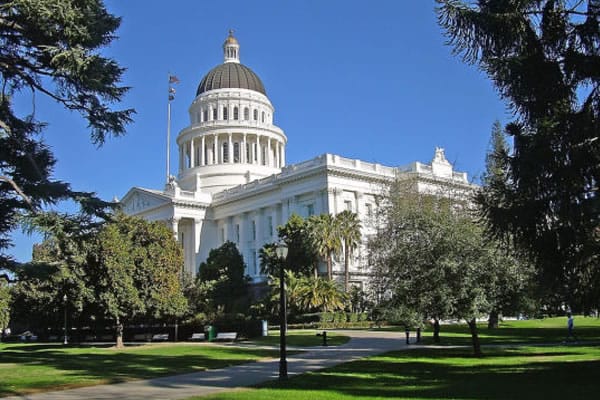
Credit: roarofthefour via flickr.com

In 2012, 'dark money' accounted for over $300 million spent out of the total $6 billion according to Open Secrets. 'Dark money' refers to spending in an election where the donors behind the money are anonymous often with the aid of 501(c)(4) and (c)(6)'s. From $5.2 million in 2006, spending from these types of organizations more than doubled following the Supreme Court's decision in FEC v. Citizens United.

Dark money has already played a role in California, specifically on propositions 30 and 32. Prop. 30 increased taxes and Prop. 32 banned unions and corporations from using their general treasury funds for campaign donations.

Outside money poured into the No on 30/Yes on 32 campaign. Prompted by the suspicious activity, California Common Cause (CCC) asked the California Fair Political Practices Commission (FPPC) to investigate an $11 million contribution to the campaign.

“The $11 million contribution from a group which has previously never spent more than $500,000 on a political campaign raises 11 million red flags– and suggests that this group is only a shell organization whose primary purpose is to shield its donors from disclosure,” said a spokesman for CCC.

The investigation culminated with an admission from Americans for Responsible Leadership (ARL), a 501(c)(4) nonprofit based in Arizona:

“ identified the true source of the contribution as Americans for Job Security, through a second intermediary, The Center to Protect Patient Rights.”

Though their campaign ultimately failed, the effect was felt by labor activists.

“Working people who were trying to preserve their voice and invest in California's future were up against a small handful of people who could easily raise millions of dollars with a stroke of a pen.” said Assemblywoman Lorena Gonzalez, who is also a former secretary-treasurer and CEO of the San Diego-Imperial Counties Labor Council.

“[T]he Yes on 32 people looked very hypocritical when they are saying they're trying to clean up the system on one hand but funneling millions in secret campaign contributions into their war chest on the other."

Organizations like CCC have advocated for tighter regulations through legislation such as the Sunshine in Campaigns Act, which aims for greater transparency in elections.

Some argue that dark money helps protect donors from political witch hunts, a common occurrence in today's hyper-partisan atmosphere. Likewise, detractors contend that additional regulation is unnecessary given that the donors to ARL were discovered.

However, the risk for corruption remains and it's not unreasonable for the public to want to know who's funding election advertising.

Tags: News

Adhere to the IVN etiquette

By posting a comment, you agree to adhere to our etiquette rules: No partisan attacks, no personal attacks, substantiate your sources, no self-promotion.

Get IVN’s Free Weekly Newsletter:Get IVN’s Free Newsletter

Get IVN’s Free Weekly Newsletter:Get IVN’s Free Newsletter

Nonpartisan Issues. Diverse Perspectives.

Check your inbox and click the link to confirm.

Republish this article

Republishing guidelines

Republish IVN articles for free. Independent Voter News articles may be republished online or in print under a Creative Commons BY-NC-ND 4.0 license, on these terms:

  1. Credit the author and IVN. Keep the byline ("By Author Name, Independent Voter News") and the attribution note at the end, which links to the original.
  2. Keep the meaning. You may update time and place references and apply your house style. You may trim for length, as long as the cuts don't change the meaning or misrepresent the author. Keep the headline. Mark any additions as your own (for example "Additional reporting by ...").
  3. Translations are welcome. Translate faithfully, add "Translated from English by [your outlet]", and tell us at editor@ivn.us.
  4. Keep the links, including the link to the original article.
  5. Keep the tracking image. The HTML includes a 1-pixel image that counts readers on your page. It collects no personal information.
  6. Photos and illustrations. Images credited to IVN may be used with this article only. Images credited to others (AP, Getty, Unsplash, Wikimedia and so on) stay under their owners' terms. Secure the rights or switch "Include images" off.
  7. Don't sell it. You can't sell our articles or sell ads specifically against them. Your normal site advertising is fine.
  8. No implied endorsement. Don't suggest that IVN or the author endorses you, your candidates or your causes, or that donations to you support IVN.
  9. Keep labels. Opinion or analysis pieces keep that label.
  10. Point search engines to the original. Set the canonical URL of your copy to the original IVN article (the HTML we give you includes the tag).
  11. No bulk or automated republishing, and don't submit our articles to aggregators (Apple News, Google News, MSN) as your own.
  12. Corrections and removals. Update your copy when we correct it, and remove it promptly if we ask. We'll contact you at the email you give us.
  13. Questions or print republication: editor@ivn.us.

IVN staff: fill in who you're inviting above, then create the invite.

Preparing the article

Dark Money in California Elections Likely to Return in 2014

Choose a format
  • HTML
  • Email HTML
  • Markdown
  • Formatted (.docx)
  • Plain text
  • WordPress blocks
  • PDF
Choose a platform

Photos credited to others need their owners' permission.

To for

Republishing somewhere else? Questions? editor@ivn.us