Skip to content
Sign up free
News

Do Political Conventions Influence Undecided Voters?

Do Political Conventions Influence Undecided Voters?

By Ricky Gandhi

2-minute read

Credit: NPR

Political_Conventions_influence

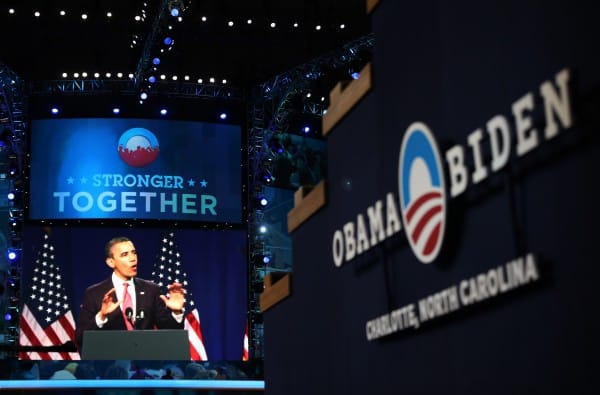
With the talk of political conventions fresh in the air, some might wonder about their relevance in modern day politics. Before the extensive primary election season, political conventions served to officially nominate a party's candidate. While the conventions still do this, they may have garnered another objective since the invention of television. Depending on their quality, political conventions influence and attract millions of undecided voters. In a tight election, these select voters can decide the outcome of the race.

Not everyone will alter their decisions based off of political conventions influence, "but for millions of voters, the decision is made during the conventions," says the National Journal.

The data support this claim as 14% of voters made their decisions at the time of the conventions during the 2004 presidential elections. Despite being far from a majority, the figure translates to roughly 18.1 million voters affected by watching the convention. According to a PBS poll, when asked "Will the events at either party’s convention affect the way that you vote?", 82% said no, while 18% said yes. This traditionally translates into a political "bump" in the polls for the nominees--however small it may be.

In 2008, McCain edged out Obama 6% to 4% in post-convention polls, giving McCain a net gain of 2%. In 2004, Kerry actually lost a percentage point, while Bush gained 2%. Even small, this shows convention and speeches must occur as perfectly as possible. Mishaps or poor speakers may actually harm the nominee's chances of winning the election while the opposite can potentially give a nominee a slight, but important, advantage. In rare instances, a convention can give a substantial boost. Clinton, for example, gained 16% over Bush Sr.'s modest 5%.

These bumps occur because politically inactive voters begin to take notice of the election. In essence, conventions "become a wake-up call of sorts for the politically disengaged, reminding them to start paying attention to an election barely two months off," says a USA Today op-ed. In terms of political milestones, the conventions remain "the most watched political events except for the fall debates."

Along with the potential bump, this probably explains why so much hype surrounds these conventions. For the disengaged voter or casual political observer, the "real" campaign starts here. For the speakers, the conventions serve as an opportunity to give a final, unfiltered message to a national audience. Despite many viewers seeing no value in these conventions, they still have an impact on some voters. This might be reason enough for the parties to continue conducting them.

Tags: News

Adhere to the IVN etiquette

By posting a comment, you agree to adhere to our etiquette rules: No partisan attacks, no personal attacks, substantiate your sources, no self-promotion.

Get IVN’s Free Weekly Newsletter:Get IVN’s Free Newsletter

Get IVN’s Free Weekly Newsletter:Get IVN’s Free Newsletter

Nonpartisan Issues. Diverse Perspectives.

Check your inbox and click the link to confirm.

Republish this article

Republishing guidelines

Republish IVN articles for free. Independent Voter News articles may be republished online or in print under a Creative Commons BY-NC-ND 4.0 license, on these terms:

  1. Credit the author and IVN. Keep the byline ("By Author Name, Independent Voter News") and the attribution note at the end, which links to the original.
  2. Keep the meaning. You may update time and place references and apply your house style. You may trim for length, as long as the cuts don't change the meaning or misrepresent the author. Keep the headline. Mark any additions as your own (for example "Additional reporting by ...").
  3. Translations are welcome. Translate faithfully, add "Translated from English by [your outlet]", and tell us at editor@ivn.us.
  4. Keep the links, including the link to the original article.
  5. Keep the tracking image. The HTML includes a 1-pixel image that counts readers on your page. It collects no personal information.
  6. Photos and illustrations. Images credited to IVN may be used with this article only. Images credited to others (AP, Getty, Unsplash, Wikimedia and so on) stay under their owners' terms. Secure the rights or switch "Include images" off.
  7. Don't sell it. You can't sell our articles or sell ads specifically against them. Your normal site advertising is fine.
  8. No implied endorsement. Don't suggest that IVN or the author endorses you, your candidates or your causes, or that donations to you support IVN.
  9. Keep labels. Opinion or analysis pieces keep that label.
  10. Point search engines to the original. Set the canonical URL of your copy to the original IVN article (the HTML we give you includes the tag).
  11. No bulk or automated republishing, and don't submit our articles to aggregators (Apple News, Google News, MSN) as your own.
  12. Corrections and removals. Update your copy when we correct it, and remove it promptly if we ask. We'll contact you at the email you give us.
  13. Questions or print republication: editor@ivn.us.

IVN staff: fill in who you're inviting above, then create the invite.

Preparing the article

Do Political Conventions Influence Undecided Voters?

Choose a format
  • HTML
  • Email HTML
  • Markdown
  • Formatted (.docx)
  • Plain text
  • WordPress blocks
  • PDF
Choose a platform

Photos credited to others need their owners' permission.

To for

Republishing somewhere else? Questions? editor@ivn.us