
Photo Courtesy: Mike Porter/Wikipedia Commons
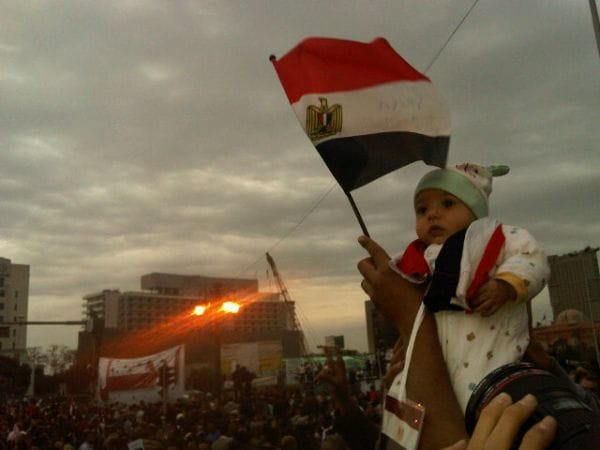
Ongoing Egyptian Protests Have US Government Officials Uneasy
The story of The Middle East is one of perpetual in-fighting, shifting alliances, and an ever-changing map. Thus, Egypt stands out among its peers as one of the few countries with a consistent and clear historical tradition. That actuality has allowed the country to project a revered cultural and military standing within its neighborhood, and stake a claim as one of the key geopolitical powers of the region. Therefore, its importance to US strategic interests is paramount, and the reason that the country has been rewarded with the largest amount of US foreign aid dollars, after Israel, since the early 80's. However,the recent turmoil, following the revolution against entrenched strongman Hosni Mubarak, has jeopardized that relationship, and brought about uncertainty on both sides. The question, then, becomes whether the US spigot to Egyptian Foreign Aid is about to run dry?
As previously mentioned, Egypt is seen by many academics as a cultural behemoth in Arab thought and ideology. Following the abdication of the Egyptian monarchy in 1952, coupled with the removal of English troops within the area, General Gamal Abdel Nasser took power and went to work launching an extensive campaign to reignite the Arab spirit. It was a policy that brought about several revolutions and a social zeitgeist. Swept up in the fervor of nationalism, several countries, led by Egypt, launched repeated military campaigns at the nation of Israel; assaults which were quickly dashed. The US/Israeli coalition, during the conflicts, did America no favors among the neighbors, and made it a volatile land, in which it was not welcome -- despite America's need for stable and inexpensive oil supplies. Following the death of Nasser, and the rise of Anwar Sadat, America launched several conciliatory overtures at Egypt, which were finally accepted with the promise of large cash reserves, hinged upon the fact that Egypt would leave Israel alone, and acquiesce to US strategy. That partnership cost Sadat his life, but set the tone for US foreign policy within the Middle East.
However the recent fall of Sadat's successor, Hosni Mubarak, has fractured that traditional partnership, and both the US and Israel have shown uneasiness at the rhetoric coming from Egypt's fledgling leadership party, the Muslim Brotherhood, who support an Islamic-based government rather than the traditional secular, military state. The recent protests pertaining to the amateur film, "The Innocence of Islam", have further stoked nerves. Speaking with Telemundo, President Obama echoed these concerns in a statement that broke from traditional State Department dialogue on the matter, “You know, I don’t think that we would consider them(Egypt) an ally but we don’t consider them an enemy.”
President Obama's opponent, Mitt Romney, has also joined the chorus of those critiquing the new leadership and events within the country, saying, at the recent Clinton Global Initiative Conference, that he was "troubled" by the developing Anti-American sentiment in the region, and that his vision for foreign aid would focus on benefiting domestic businesses rather than their governments.
They are, perhaps, elevating the terse rhetoric on the country due to the fact that the larger issue of foreign aid has come under fire. Aid has been a favorite tactic of the State Department since the Cold War. It's been used to meld tumultuous allies, and turn enemies into uneasy partners. However, it's possible that many citizens do not grasp the full scope of US aims and efforts regarding aid. An opinion poll, taken in 2010, indicates that most citizens believe that the US sends nearly 25% of its budget to other countries, but that number is, in fact, less than 1%. Even smaller is Egypt's claim to that figure, which is roughly $1.5 billion -- a pittance compared to the larger US government spending.
Despite the relatively small nature of US-Egyptian Aid, the issue has been brought to the forefront of the current electoral debate. Many observers would prefer that current aid situation not continue in its present state if Egypt continues to show little appetite for reform. Voters have never been favorable to the notion of sending tax dollars to unfriendly faces. Dr. Zeev Maoz, Director of the International Relations Program at UC Santa Barbara, believes that Egypt's foreign aid allotment could be in jeopardy, and that the recent US rhetoric is not simply a case of election year politicking, but rather indicative of a possible pivot, if Egypt does not alleviate US concerns. "U.S.-Egyptian relations will depend to a large extent on two elements of Egyptian policy: whether the Egyptian government will uphold democratic principles—including free speech, minority rights (e.g., Copts), women’s rights, etc. and whether they will continue to respect the Israeli-Egyptian peace process." stated Dr. Maoz.
Ultimately, a stable Egypt serves the larger interests of present US Foreign Policy, which seeks to minimize regional turmoil and prevent a clear hegemon from developing within the boundaries of the Middle East. The instability experienced in Egypt has had clear ramifications for those larger goals, as Egypt's neighbors have, now, taken to voicing similar discontent with Western policies. Whether their present aid relationship continues, appears to hinge on Egyptian reform; a prospect that is not guaranteed in the rapidly changing political landscape that has awoken in the post-Mubarak era.