
Credit: Europeword.com
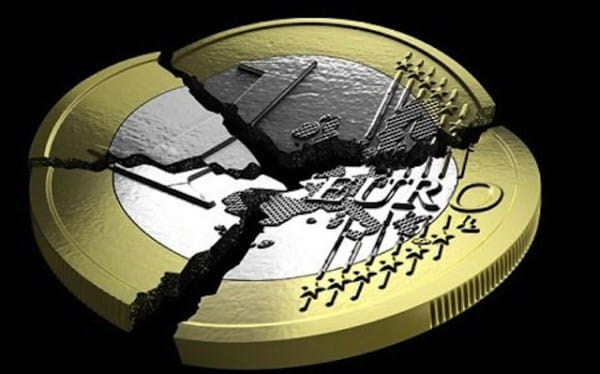
A wide array of topics has surfaced throughout this election, most of which will arise again during the debates. However, one particular topic has received very little public attention. The Eurozone crisis is still significant despite media coverage, which is now laser focused on the U.S. election. The crisis affects all countries using the Euro currency, remains a crucial topic within the global economy, and the consequences of which can significantly impact US recovery.
So far, the Obama administration has indicated the crisis as a "top global priority" and has engaged in frequent private talks with EU leaders. The Romney camp, on the other hand, has severely criticized Obama's encouragement of a European bailout or stimulus for Spain, Greece, Portugal, and Ireland, stating that Obama's strategy remains "unwise" and illuminates the "ignorance of the causes of the crisis and of a growth trend in the future."
The crisis "is one that affects the rest of the world through investments, debt and trade and that is risking serious global economic decline."
A Euro collapse would have an adverse effect on markets, trades, and stocks, and since many Americans pay little attention to the crisis, they would "not know where this comes from and blame it on Obama. He's the one in the driving seat," says Bruce Stokes of the Pew Research Centre. If the Euro collapses, it has the potential to negatively impact Obama's presidential campaign. President Obama has asked the Eurozone to keep Greece at least until after the election, most likely to prevent his reelection bid from being effected.
A World On Edge About the Eurozone
Currently, the European Union has taken measures to mitigate the situation by establishing a European Stability Mechanism that "will cooperate very closely with the International Monetary Fund (IMF) in providing stability support. The active participation of the IMF will be sought, both at technical and financial level. A Euro area Member State requesting financial assistance from the ESM is expected to address, wherever possible, a similar request to the IMF."
The treaty should, if all goes according to plan, go into effect on January 1, 2013 and will act as a conditional bailout fund. "It is the 'permanent' institution that will take over from the temporary fund, the European Financial Stability Facility," according to Matina Stevis of the Wall Street Journal.
Another treaty, the Fiscal Stability Treaty (formally known as the Treaty on Stability, Coordination and Governance in the Economic and Monetary Union), has also made headlines in Europe.
In a nutshell, it advocates fiscal responsibility. A summary of the treaty explains that nations must agree to "a general government deficit of not more than 0.5% of Gross Domestic Product (GDP) or be working towards that target within time limits specified by the EU (this is sometimes called the 'deficit brake')." Additionally, a "general government debt of not more than 60% of GDP; if it is more than 60%, they must be reducing it at the rate of one twentieth each year (this is sometimes called the 'debt brake')." This treaty is also set to take effect January 1, 2013.
As of now, 25/27 member states have signed on (the UK and the Czech Republic have not). 11/25 have ratified the treaty, with the German courts confirming the legality of the treaty with respect to their nation on September 12, 2012.
Whatever the outcome, the Euro crisis will have a major impact on the global economy. It serves as a wake up call to nations and citizens in realizing that the economy remains a global, not national or local, entity.