
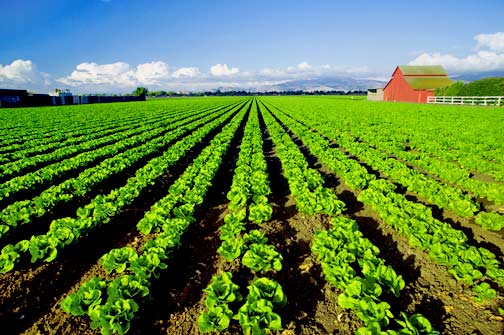
Photo: organicconnectmag.com
Republican Missouri Senate candidate Todd Akin recently told reporters that he opposes the Senate version of the 2012 Farm Bill due to the legislation’s spending on the National School Lunch Program. Reiterating his point to farmers at the Missouri Farm Bureau's Political Action Committee, FARM-PAC, the Columbia Daily Tribune reports that the six-term congressman representing suburban St. Louis County said:
"I've never been a big fan of the government, and particularly more and more and more growing those programs.”
Akin is challenging Democratic Senator Claire McCaskill, who voted for the legislation. As reported by the Colombia Daily Tribune, McCaskill rebutted Akin for opposing federal spending on school lunches saying:
"The notion that the federal government should stop giving support to help feed children is a nonstarter with me."
The Farm Bill’s roots extend back to the Great Depression and Franklin Roosevelt’s New Deal. Congress passed the Agricultural Adjustment Act in 1933 in order to protect farmers from low prices due to over-production. The legislation directed the federal government to pay farmers not to grow on certain percentages of land and to buy and store excess commodities in case of drought and inclement weather. It also included a precursor to the food stamp program.
Since the Great Depression, Farm Bill debates have emphasized regional differences. Southern lawmakers have sought increased price protections for cotton, rice, and peanuts. Northern lawmakers have opposed cuts to food assistance programs to low-income families in big-cities. Western legislators have favored increases to crop insurance and subsidies.
Senators from Mississippi, Georgia, and Arkansas argued for greater protections on cotton, rice, and peanuts during this year’s farm bill debate, while Senator Kirsten Gillibrand of New York expressed concerns that reductions in SNAP spending would cost low-income families in her state $45 a month. Senate Republicans in Missouri, Indiana, Kansas, Iowa, Nebraska, Wyoming, and the Dakotas joined Democrats in voting for the bill that provides disaster aid to farmers affected by this year's severe drought.
In opposing the Senate’s version of the bill, Akin stands with deficit hawks and small government conservatives in the House of Representatives who have argued that debt reduction remains pivotal to job creation. Akin twice voted in favor of Paul Ryan’s budget plan that according to the Center on Budget and Policy Priorities, would decrease the Supplemental Nutrition Assistance Program (SNAP), commonly referred to as food stamps by $133.5 billion over the next 10 years.
President Obama campaigning in Iowa has called for quick passage of the legislation in the House. The president has used the impasse over SNAP to criticize Mitt Romney’s vice-presidential pick Paul Ryan, accusing Ryan of blocking aid to drought stricken farmers. Politico reports that the president told supporters in Council Bluff, Iowa last week:
"I am told that Gov. Romney's new running mate, Paul Ryan, might be around Iowa in the next few days. He is one of the leaders of Congress standing in the way. So if you happen to see Congressman Ryan, tell him how important this farm bill is to Iowa and our rural communities."
House Speaker John Boehner defended House Republicans who passed a separate disaster relief package in a statement released by his office:
“A bipartisan House majority took responsible action to help farmers and ranchers suffering from this drought. It’s unfortunate that Senate Democrats have blocked this relief package from getting to those in need.”
The House of Representatives will take up the 2012 Farm Bill when the body returns from August recess. Conferees from both chambers will need to find compromise in the two pieces of legislation upon passage of a House version. The final bill will need to pass both houses before the president can accept or reject the legislation. The current Farm Bill expires on September 30.