Skip to content
Sign up free
Election Reform

Gerrymandering: Everything You Need to Know in 60 Seconds

Gerrymandering: Everything You Need to Know in 60 Seconds
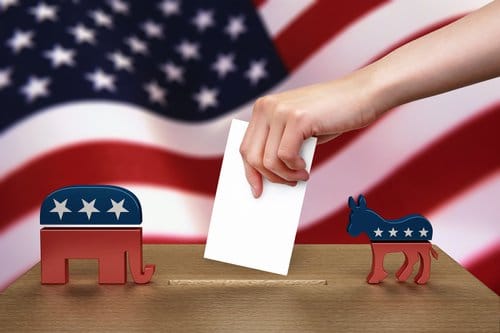
Image generated by IVN staff.

There are several ways the Republican and Democratic Parties manipulate the vote and control elections. They control the narrative, who gets to vote in primary elections, and redraw electoral districts to their favor.

By Shawn M Griffiths

2-minute read

There are several ways the Republican and Democratic Parties manipulate the vote and control elections. They control the narrative, who gets to vote in primary elections, and redraw electoral districts to their favor.

The last point is the subject of a recent video put out by GOOD Magazine. The video explains gerrymandering for viewers in 60 seconds. One of the most important takeaways about gerrymandering: it's legal.

That's right. For decades the Republican and Democratic Parties have manipulated electoral districts, diluted the voting power of the political minority, and disenfranchised millions of voters, and the courts have let it slide as long as the parties can show they did not discriminate against voters based on race.
'Two Parties, One Winner' Shouldn't Override 'One Person, One Vote'

It was not until 2016 that the first federal court ruled electoral districts in a state were so partisan that it constituted a gerrymander. The case? Gill v. Whitford out of Wisconsin, and it is currently on deck before the Supreme Court. It's a case you should know about. Here's why:

  • Gill v. Whitford is the first time the courts have ruled that partisan gerrymandering was so extreme that it violated voting rights.
  • The case also has the potential for establishing a baseline for the courts to make future rulings on the issue, striking a blow to the two-party scheme.
  • The Supreme Court has historically shied away from cases like this, ruling in 2004 that it has no measurable or judicial standard to determine what constitutes "too partisan" when lawmakers redraw electoral districts. This could change all of that. (Vieth v. Jubelirer)
  • The Supreme Court will consider a request from Wisconsin officials on Thursday, June 8, to put a stay on a lower court's ruling that state lawmakers redraw their electoral maps by the fall.

Gerrymandering isn't the only scheme the parties use to control elections, but it has ensured that over 90 percent of elections are safe for one party or the other, while violating the voting rights of millions of voters.

Adhere to the IVN etiquette

By posting a comment, you agree to adhere to our etiquette rules: No partisan attacks, no personal attacks, substantiate your sources, no self-promotion.

Get IVN’s Free Weekly Newsletter:Get IVN’s Free Newsletter

Get IVN’s Free Weekly Newsletter:Get IVN’s Free Newsletter

Nonpartisan Issues. Diverse Perspectives.

Check your inbox and click the link to confirm.

Republish this article

Republishing guidelines

Republish IVN articles for free. Independent Voter News articles may be republished online or in print under a Creative Commons BY-NC-ND 4.0 license, on these terms:

  1. Credit the author and IVN. Keep the byline ("By Author Name, Independent Voter News") and the attribution note at the end, which links to the original.
  2. Keep the meaning. You may update time and place references and apply your house style. You may trim for length, as long as the cuts don't change the meaning or misrepresent the author. Keep the headline. Mark any additions as your own (for example "Additional reporting by ...").
  3. Translations are welcome. Translate faithfully, add "Translated from English by [your outlet]", and tell us at editor@ivn.us.
  4. Keep the links, including the link to the original article.
  5. Keep the tracking image. The HTML includes a 1-pixel image that counts readers on your page. It collects no personal information.
  6. Photos and illustrations. Images credited to IVN may be used with this article only. Images credited to others (AP, Getty, Unsplash, Wikimedia and so on) stay under their owners' terms. Secure the rights or switch "Include images" off.
  7. Don't sell it. You can't sell our articles or sell ads specifically against them. Your normal site advertising is fine.
  8. No implied endorsement. Don't suggest that IVN or the author endorses you, your candidates or your causes, or that donations to you support IVN.
  9. Keep labels. Opinion or analysis pieces keep that label.
  10. Point search engines to the original. Set the canonical URL of your copy to the original IVN article (the HTML we give you includes the tag).
  11. No bulk or automated republishing, and don't submit our articles to aggregators (Apple News, Google News, MSN) as your own.
  12. Corrections and removals. Update your copy when we correct it, and remove it promptly if we ask. We'll contact you at the email you give us.
  13. Questions or print republication: editor@ivn.us.

IVN staff: fill in who you're inviting above, then create the invite.

Preparing the article

Gerrymandering: Everything You Need to Know in 60 Seconds

Choose a format
  • HTML
  • Email HTML
  • Markdown
  • Formatted (.docx)
  • Plain text
  • WordPress blocks
  • PDF
Choose a platform

Photos credited to others need their owners' permission.

To for

Republishing somewhere else? Questions? editor@ivn.us