Skip to content
Sign up free
News

Local Culture Proves Ideal for Saxophonist Charles McPherson

Local Culture Proves Ideal for Saxophonist Charles McPherson

By Cassidy Noblejas Bartolomei

2-minute read

Renowned Sax Player Moved to San Diego, Found Inspiration Artist Charles McPherson blowin' sax.
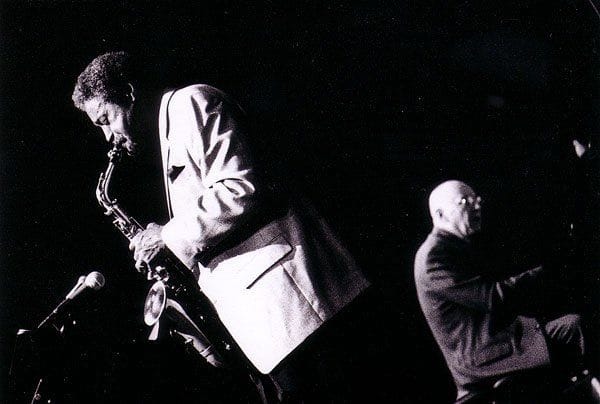
Charles McPherson

In 1978 jazz saxophonist Charles McPherson lived in New York where he played as a band member with the highly influential American jazz artist Charles Mingus. McPherson’s passionate music and intricate patterns of improvisation were well known on the New York jazz scene, but that year he planned a two month trip, and as is the case for most visitors, San Diego became his home.

Initially, he intended to visit his seventy-year-old mother who resided in San Diego to get away from what he called, the “New York rat race." Expecting to take only a brief hiatus from the intensity of his life as a successful New York musician, Charles McPherson instead found a haven of freedom and relaxation in the San Diego community and decided to make it his home.

In a recent interview, McPherson explained that getting away from the riffraff of New York allowed him to refocus on the direction he wanted to take his music.

“Being in San Diego gave me chances that New York couldn’t provide," said McPherson. "The relaxed pace of San Diego gave me the chance to get in touch with my inner self; it allowed me to contemplate and conceptualize and compose.”

He emphasized the importance of learning to use his environment to create and perform his music. In moving to San Diego, McPherson learned to combine the vigor and popularity of New York and San Francisco jazz, which sparked a traveling musicianship for the sax-player. This bi-coastal career proved to be beneficial in his work, landing him gigs in many different countries.

The San Diego environment allows McPherson to “chill out and conceive things.” When asked how the city is conducive for his creative process, he explained:

“Music is a medium that you use as a language to convey emotionality. Music is metaphoric. The human being is the main event and there’s music that goes with all the gradations of emotions that humans are capable of feeling—sadness, out-and-out ecstasy, joy, contemplativeness, sensuality, and everything in between. When I write music, the first thing I think about is ‘What is the emotionality of this whole piece? What do I want? What am I trying to convey with this tune?'”

He is able to ask himself these questions and find their musical response in the peaceful quiet of his home. After composing his works of art, he then travels to play concerts and teach clinics throughout the world and across the country. By traveling between the hustle and bustle of jazz towns to quiet suburbs, McPherson has attained a rare balance that few true artists attain.

Although jazz venues are few in San Diego, McPherson shares his musicality and talent with the community in a number of ways. Among others, he has played shows featured at the San Diego Museum of Art, the Old Globe, Humphrey’s, and every year he teaches at the USD Jazz Camp.

Tags: News

Adhere to the IVN etiquette

By posting a comment, you agree to adhere to our etiquette rules: No partisan attacks, no personal attacks, substantiate your sources, no self-promotion.

Get IVN’s Free Weekly Newsletter:Get IVN’s Free Newsletter

Get IVN’s Free Weekly Newsletter:Get IVN’s Free Newsletter

Nonpartisan Issues. Diverse Perspectives.

Check your inbox and click the link to confirm.

Republish this article

Republishing guidelines

Republish IVN articles for free. Independent Voter News articles may be republished online or in print under a Creative Commons BY-NC-ND 4.0 license, on these terms:

  1. Credit the author and IVN. Keep the byline ("By Author Name, Independent Voter News") and the attribution note at the end, which links to the original.
  2. Keep the meaning. You may update time and place references and apply your house style. You may trim for length, as long as the cuts don't change the meaning or misrepresent the author. Keep the headline. Mark any additions as your own (for example "Additional reporting by ...").
  3. Translations are welcome. Translate faithfully, add "Translated from English by [your outlet]", and tell us at editor@ivn.us.
  4. Keep the links, including the link to the original article.
  5. Keep the tracking image. The HTML includes a 1-pixel image that counts readers on your page. It collects no personal information.
  6. Photos and illustrations. Images credited to IVN may be used with this article only. Images credited to others (AP, Getty, Unsplash, Wikimedia and so on) stay under their owners' terms. Secure the rights or switch "Include images" off.
  7. Don't sell it. You can't sell our articles or sell ads specifically against them. Your normal site advertising is fine.
  8. No implied endorsement. Don't suggest that IVN or the author endorses you, your candidates or your causes, or that donations to you support IVN.
  9. Keep labels. Opinion or analysis pieces keep that label.
  10. Point search engines to the original. Set the canonical URL of your copy to the original IVN article (the HTML we give you includes the tag).
  11. No bulk or automated republishing, and don't submit our articles to aggregators (Apple News, Google News, MSN) as your own.
  12. Corrections and removals. Update your copy when we correct it, and remove it promptly if we ask. We'll contact you at the email you give us.
  13. Questions or print republication: editor@ivn.us.

IVN staff: fill in who you're inviting above, then create the invite.

Preparing the article

Local Culture Proves Ideal for Saxophonist Charles McPherson

Choose a format
  • HTML
  • Email HTML
  • Markdown
  • Formatted (.docx)
  • Plain text
  • WordPress blocks
  • PDF
Choose a platform

Photos credited to others need their owners' permission.

To for

Republishing somewhere else? Questions? editor@ivn.us