Skip to content
Sign up free
News

Mental Health Services for Elementary Schools Become Reality

Mental Health Services for Elementary Schools Become Reality

By Terri Harel

2-minute read

Photo: theparentingcenter.org
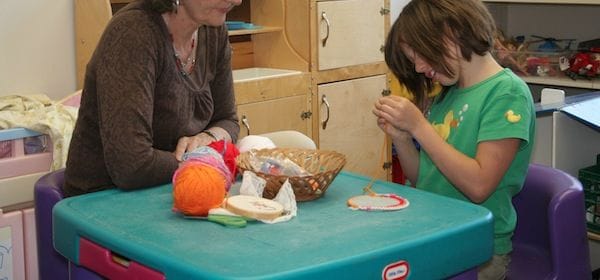
Just days before the tragedy at Sandy Hook Elementary School, Milpitas Unified School District in Northern California approved a $104,000 contract with Palo Alto-based non-profit that will provide mental health services for elementary schools. The organization, called Counseling and Support Services for Youth, will provide emotional and social counseling to six elementary schools in the district. The initiative is the product of growing concern among parents, officials, and teachers that youth mental health support is lacking but essential to providing children a full spectrum of opportunity, education, and a stable future.

A National Institute of Mental Health study from January 2011 notes a large majority of youth in need of mental health services are not receiving it. As schools fall further victim to budget cuts, students suffer the consequences in all areas from teacher support to important programs that include mental health services. The study concludes:

"About 36 percent of youth with any lifetime mental disorder received services, and only half of these youth who were severely impaired by their mental disorder received professional mental health treatment. The majority (68 percent) of the children who did receive services had fewer than six visits with a provider over their lifetime."

Services are more widespread and available to students in middle school and high school, but that might be too little too late. Mental health services for elementary schools are shown to prevent mental health complications into adolescence. Not only is elementary-age counseling demonstrated to improve academic performance, improve school environment, prevent severe disciplinary action, and reduce special education needs for students, but it is also cost-beneficial to school districts. Early intervention generates savings in public expenditures for special education, social services, and corrections/criminal justice costs.

At a Board meeting in November, School Board Vice President Marsha Grilli said, "We're providing services for our middle schools and high schools but half of our students are in elementary. And we talk about early intervention for their academics but we need to talk about interventions for other issues also." The school district plans to enact the program on both a reactive and proactive basis, meaning that teachers and administrators will be identifying academic and emotional issues within the classroom and then sending a student to counseling, as well as intervening during perceived times of crisis. The district says that the combination preventative and intervening methods should create a comprehensive mental health program beneficial to their elementary school students into adolescence.

The move takes place as mental health enters the national spotlight, in particular the long-term ramifications of isolation and lack of mental health support in youth.

Tags: News

Adhere to the IVN etiquette

By posting a comment, you agree to adhere to our etiquette rules: No partisan attacks, no personal attacks, substantiate your sources, no self-promotion.

Get IVN’s Free Weekly Newsletter:Get IVN’s Free Newsletter

Get IVN’s Free Weekly Newsletter:Get IVN’s Free Newsletter

Nonpartisan Issues. Diverse Perspectives.

Check your inbox and click the link to confirm.

Republish this article

Republishing guidelines

Republish IVN articles for free. Independent Voter News articles may be republished online or in print under a Creative Commons BY-NC-ND 4.0 license, on these terms:

  1. Credit the author and IVN. Keep the byline ("By Author Name, Independent Voter News") and the attribution note at the end, which links to the original.
  2. Keep the meaning. You may update time and place references and apply your house style. You may trim for length, as long as the cuts don't change the meaning or misrepresent the author. Keep the headline. Mark any additions as your own (for example "Additional reporting by ...").
  3. Translations are welcome. Translate faithfully, add "Translated from English by [your outlet]", and tell us at editor@ivn.us.
  4. Keep the links, including the link to the original article.
  5. Keep the tracking image. The HTML includes a 1-pixel image that counts readers on your page. It collects no personal information.
  6. Photos and illustrations. Images credited to IVN may be used with this article only. Images credited to others (AP, Getty, Unsplash, Wikimedia and so on) stay under their owners' terms. Secure the rights or switch "Include images" off.
  7. Don't sell it. You can't sell our articles or sell ads specifically against them. Your normal site advertising is fine.
  8. No implied endorsement. Don't suggest that IVN or the author endorses you, your candidates or your causes, or that donations to you support IVN.
  9. Keep labels. Opinion or analysis pieces keep that label.
  10. Point search engines to the original. Set the canonical URL of your copy to the original IVN article (the HTML we give you includes the tag).
  11. No bulk or automated republishing, and don't submit our articles to aggregators (Apple News, Google News, MSN) as your own.
  12. Corrections and removals. Update your copy when we correct it, and remove it promptly if we ask. We'll contact you at the email you give us.
  13. Questions or print republication: editor@ivn.us.

IVN staff: fill in who you're inviting above, then create the invite.

Preparing the article

Mental Health Services for Elementary Schools Become Reality

Choose a format
  • HTML
  • Email HTML
  • Markdown
  • Formatted (.docx)
  • Plain text
  • WordPress blocks
  • PDF
Choose a platform

Photos credited to others need their owners' permission.

To for

Republishing somewhere else? Questions? editor@ivn.us