Skip to content
Sign up free
News

Political Attack Ads Impact Voter Perception In Elections

Political Attack Ads Impact Voter Perception In Elections

By Brenda Evans

2-minute read

Political attack ads have been used more during the 2012 campaign season than in previous years. According to a Wesleyan Media Project report from March, 70% of campaign ads were negative. That number far exceeds the mere 9.1% of negative ads at the same point during the 2008 election season.

While many of these political attack ads are funded by interest groups and Super PACs, the candidates have put their respective stamps of approval on plenty of attack ads of their own.

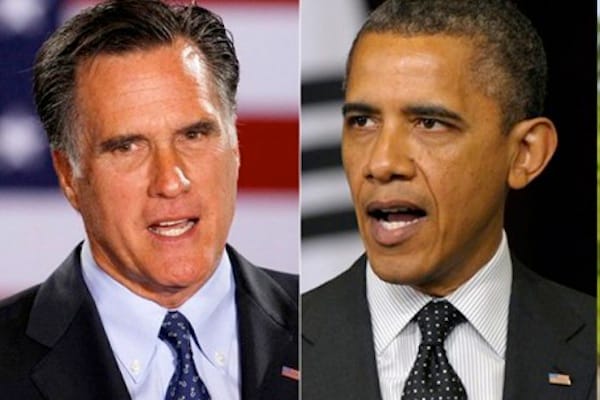
President Obama is currently outspending Mitt Romney on political ads, but Romney planned to hold many of his ads until the last weeks before Election Day. Both candidates have favored attack ads for their campaigns. A Washington Post graphic shows 85% of Romney's spending went to negativing advertising and 74% of Obama's $170 million.

"Even though voters say they don't like negative campaigning, the ads are effective," said Jack Cafferty of CNN. "Experts say negative ads tap into emotions like anxiety, fear and disgust that can push a voter away from a candidate."

During an election year, negative campaign ads and political attacks are expected, but such divisive messages may be doing more than pushing voters away from an opposing candidate. A Rasmussen Reports survey shows that only 23% of Americans believe today’s children will be better off than their parents and that number is at a high for 2012.

According to Gallup, 53% of Americans also believe that the country's economic condition is worsening overall and a Huffington Post poll chart shows that over half of Americans think that the nation is headed in the wrong direction. While these numbers show the pessimism of American voters, they do not conclusively find what is to blame. It could be the prominence of political attack ads , or it could be the repetitive reports of terrorist attacks and environmental dangers.

While such ads are supposedly effective, a study done by Vanderbilt University shows that viewers describe them as memorable. Whether or not viewers like the ads is not the priority; it is being able instill that voice of doubt in a voters mind when Election Day comes.

American politics are becoming increasingly polarized and these campaigns are deepening the divide. During Wednesday's debate, Romney and Obama both spoke of working across party lines, but nothing of including independent-minded politicians. While more Americans identify themselves as independents, there has not been an increase in representation. The two dominant parties are constantly focused on one another and any independent voice is often lost in the crossfire.

If this election season is any indication of what to expect in coming years, the partisan divide is only going to deepen. Political attack ads are another tool used by partisan groups to polarize the electorate in their favor. With 38% of independents describing such ads as "memorable," there isn't much of an incentive for a change in strategy.

Tags: News

Adhere to the IVN etiquette

By posting a comment, you agree to adhere to our etiquette rules: No partisan attacks, no personal attacks, substantiate your sources, no self-promotion.

Get IVN’s Free Weekly Newsletter:Get IVN’s Free Newsletter

Get IVN’s Free Weekly Newsletter:Get IVN’s Free Newsletter

Nonpartisan Issues. Diverse Perspectives.

Check your inbox and click the link to confirm.

Republish this article

Republishing guidelines

Republish IVN articles for free. Independent Voter News articles may be republished online or in print under a Creative Commons BY-NC-ND 4.0 license, on these terms:

  1. Credit the author and IVN. Keep the byline ("By Author Name, Independent Voter News") and the attribution note at the end, which links to the original.
  2. Keep the meaning. You may update time and place references and apply your house style. You may trim for length, as long as the cuts don't change the meaning or misrepresent the author. Keep the headline. Mark any additions as your own (for example "Additional reporting by ...").
  3. Translations are welcome. Translate faithfully, add "Translated from English by [your outlet]", and tell us at editor@ivn.us.
  4. Keep the links, including the link to the original article.
  5. Keep the tracking image. The HTML includes a 1-pixel image that counts readers on your page. It collects no personal information.
  6. Photos and illustrations. Images credited to IVN may be used with this article only. Images credited to others (AP, Getty, Unsplash, Wikimedia and so on) stay under their owners' terms. Secure the rights or switch "Include images" off.
  7. Don't sell it. You can't sell our articles or sell ads specifically against them. Your normal site advertising is fine.
  8. No implied endorsement. Don't suggest that IVN or the author endorses you, your candidates or your causes, or that donations to you support IVN.
  9. Keep labels. Opinion or analysis pieces keep that label.
  10. Point search engines to the original. Set the canonical URL of your copy to the original IVN article (the HTML we give you includes the tag).
  11. No bulk or automated republishing, and don't submit our articles to aggregators (Apple News, Google News, MSN) as your own.
  12. Corrections and removals. Update your copy when we correct it, and remove it promptly if we ask. We'll contact you at the email you give us.
  13. Questions or print republication: editor@ivn.us.

IVN staff: fill in who you're inviting above, then create the invite.

Preparing the article

Political Attack Ads Impact Voter Perception In Elections

Choose a format
  • HTML
  • Email HTML
  • Markdown
  • Formatted (.docx)
  • Plain text
  • WordPress blocks
  • PDF
Choose a platform

Photos credited to others need their owners' permission.

To for

Republishing somewhere else? Questions? editor@ivn.us