
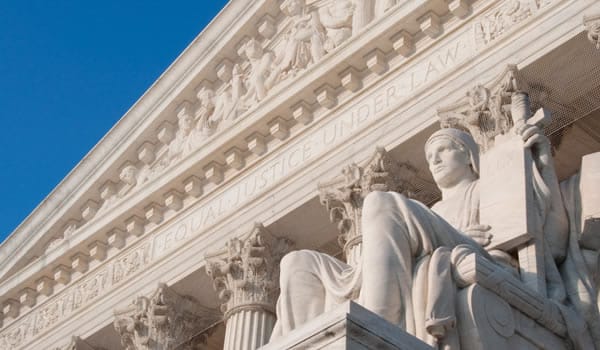
After numerous appeals by opponents since the system was first implemented in 2008, the Supreme Court has denied a hearing the Washington top-two open primary case, ensuring that Washington retains its change from a blanket primary to a ‘top-two’ open primary system.
The ‘top-two’ system allows for multiple candidates from all political parties to compete in the primaries and then the top two vote-getters of the primaries compete with each other in the general election, regardless of political affiliations. A departure from how primaries were traditionally contested, the top two in the general elections can both belong to or express preference for the same party. Or, in the case of independent candidates, no party at all.
Furthermore, candidates hoping to use party affiliations as part of their campaign no longer require an endorsement from a political party. In fact, any form of endorsement on ballots, be it from political parties, interest groups or labor unions, is prohibited. The ballot, under the new system, lists all candidates including independents and provides information on party preference as opposed to party affiliation.
Opponents of the ‘top-two’ open primary, including Republicans, Democrats, the Green Party and Libertarians, argue that the system infringes on the right of political parties to nominate candidates and decide who can claim party affiliation. Since the system allows candidates to affiliate with parties even when the party objects, critics appeal against the reform on the grounds that it may confuse voters.
Both the US District Court and the 9th Circuit Court of Appeals have rejected the argument that the new primary system in Washington violates the constitutional rights of political parties, asserting instead that voter confusion is a ‘facial challenge’ that does not warrant striking down on the mere possibility that it may confuse voters. The courts maintain that the new primary system “does not create the possibility of widespread confusion among the reasonable, well-informed electorate.”
California’s ‘top-two’ primary is modeled after Washington’s primary system. The new system in California has faced its share of legal battles but opponents to the open primary have been losing battle after legal battle. In fact, San Francisco Superior Court has gone as far as awarding the defendants attorney fees to the tune of $243,279.50 in attorney’s fees.
Attorney fees are usually awarded if a court deems a lawsuit frivolous, without merit or as abusing the judicial process. Attorney fees are awraded to intervenors, as they were in this case, when they "make a substantial contribution" to the outcome of the case based on arguments that were not otherwise made by the principal parties to the case.
Awarding the defendants attorney fees sends an important message to both camps: the defendants are no longer required to continuously defend themselves at high costs to their selves against an issue that the courts regard as one that does not infringe on associational rights or create systematic voter confusion. The message will not only resonate with opponents in Washington and California but in Arizona too, where the issue is on the ballot and with other states considering adopting the ‘Top-Two’ open primary system.
Proposition 121, also known as the Open Elections/Open Government Act, seeks to emulate Washington and California by replacing partisan primaries with the 'top-two' system in Arizona. If passed, Arizona will be the third state to adopt the ‘top-two’ open primary system.
Save Our Vote AZ, a coalition that is the main opponent to Prop 121, has fought the measure five times in court, twice reaching Arizona’s Supreme Court, but has thus far failed to keep the amendment off the ballot. Since the financial onus of appealing the 'top-two' primary system in California now falls squarely on the plaintiff, it emboldens defendants of the system in states like Arizona in their efforts to repeal present primary models.
By firmly rejecting the two main arguments against the 'top-two' open primary system, a violation of associational rights and voter confusion, and by upholding the top-two system in Washington and California, courts have given a strong indication that if passed, states like Arizona too will be allowed to uphold the new primary system if appealed.