
Credit: flickr.com (Sen. Durbin)
Educational institutions adopt zero-tolerance policies and strong punishments in hopes of deterring or correcting disruptive student behavior. However, the school-to-prison pipeline phenomenon suggests that these punitive measures undermine academic performance and instead foster criminal behavior.
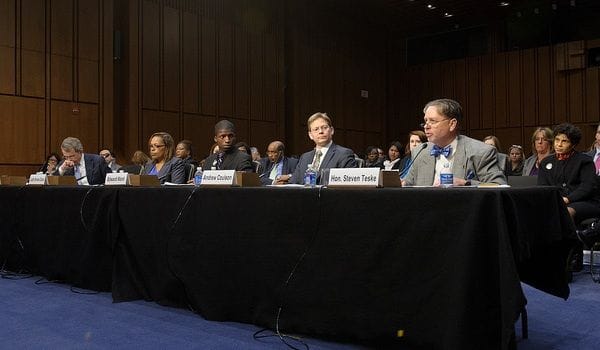
To address the issue, the Senate Judiciary Subcommittee on Constitution, Civil, and Human Rights held a hearing on December 12 entitled Ending the School-to-Prison Pipeline. The hearing was the first time the federal government officially recognized the school-to-prison pipeline.
Senator Dick Durbin (D-IL), chairman of the subcommittee, gave the opening statements:
"In the 1990s, concerns about school violence, some very rightful concerns, and a growing awareness of bullying led many schools to hire police and institute zero-tolerance policies. This resulted in a dramatic increase in suspensions, expulsions and even in-school arrests for misbehavior that had been judged to that point to be rather normal for school children. This school to prison pipeline has moved scores of young people from classrooms to courtrooms."
Rep Bobby Scott (D-VA) testified on the issue. He called the "get tough" approaches to discipline regressive and ineffective. He argued that taking students out of the classroom leaves them without guidance or assistance. Instead, the congressman calls for schools to be change agents with researched-based approaches to helping troubled students.
Edward Ward, a student of DePaul University, shared anecdotes of the oppressive nature of high school discipline.
"Although I was an honors student, I felt I was in a constant high state of alert," he said.
To Ward, the on-campus officers gave the impression that their sole duty was to give suspensions and expulsions. He recalled stories from friends who were suspended for lacking school ID cards, showing up late even for valid reasons, or shouting in halls.
The American Civil Liberties Union (ACLU) has spoken out against these disciplinary measures. The statistics on the school-to-prison pipeline phenomenon suggest that it disproportionately affects minorities.
The ACLU cited the following statistics for the Department of Education:
African American students are 3.5 times more likely than their white peers to be suspended—and while they represented just 18% of the students in the sample, they accounted for 39% of expulsions. Total students arrested or referred to law enforcement nationally, 70% were Latino or African American.
The racial disparity is not ACLU's only concern. Students with disabilities, physical or mental, were also addressed in the hearing:
Students with disabilities are more than twice as likely to receive one or more out-of-school suspensions. Although they made up only 12% of the students sampled by the Department of Education in their most recent data collection, they made up 70% of those subject to physical restraints.
The statistics may or may not suggest discrimination with policy enforcement. It could be that these students are predisposed to behavior that falls under the policies in question. However, what educational institutions have in place to react to misbehavior does not help or encourage students to improve.
The ACLU made policy suggestions by encouraging the passage of HR 3165, the Positive Behavior for Safe and Effective Schools Act, which would dedicate Title I funds to positive behavior support programs. The organization also supports HR 3027, also known as the Ending Corporal Punishment in Schools Act.
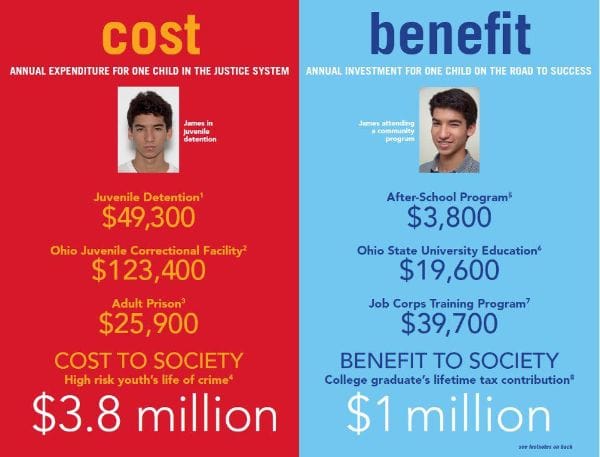
Statistics also suggest that the cost of maintaining someone in the criminal justice system far exceeds the investment in education:
The Ending the School to Prison Pipeline hearing can be viewed on the Senate website. Senator Durbin also announced in his opening statement that the conversation could be followed using the Twitter hashtag #school2prison.