
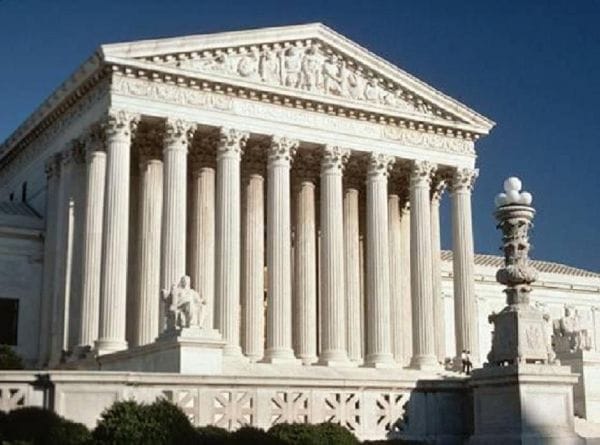
The Supreme Court has granted the request of Liberty University and ordered the United States Court of Appeals for the Fourth Circuit to re-hear the case about the constitutionality of portions of the Patient Protection and Affordable Care Act of 2009, also known as Obamacare (Affordable Care Act).
The Fourth Circuit Court of Appeals will consider the constitutionality of the Affordable Care Act’s employer mandate for health insurance coverage that could potentially include coverage for abortions. Liberty University argues that the requirements are unlawful as a violation of their right to free exercise of religion under the First Amendment and the Religious Freedom Restoration Act. The Fourth Circuit could hear arguments as early as next spring.
The District Court Case
Liberty University, a private Christian college, sued the Secretary of the Treasury in district court in 2010 over the individual and employer mandates of the Affordable Care Act.
The individual mandate of the Affordable Care Act requires all individuals to purchase and maintain minimum essential health insurance or pay significant penalties. The employer mandate dictates that employers provide employees with minimum essential health insurance coverage at what the government determines is affordable, or pay significant penalties.
Liberty University argued that the provisions of the Affordable Care Act were unlawful for several reasons, including violation of their right to free exercise of religion under the First Amendment and Religious Freedom Restoration Act. Liberty University says that the law’s requirement for employers to pay for health insurance could lead to forced funding of abortion, which violate their “sincerely held religious beliefs against facilitating, subsidizing, easing, funding or supporting abortions.”
Although several cases have been heard arguing that the Affordable Care Act is unconstitutional, this is the only case alleging unconstitutionality on religious grounds.
The Secretary of the Treasury argued that Liberty University did not have the standing to bring the case because of the Anti-Injunction Act, which says that taxpayers cannot challenge the legality of taxes that they have not yet been required to pay. The court concluded that the Anti-Injunction Act did not bar hearing the case and ruled in favor of the Secretary of the Treasury, concluding that Congress acted in accordance with its powers under the Commerce Clause when it created the individual and employer mandates of the Affordable Care Act because the mandates were a form of regulating economic activity, which is under Congress’ authority.
The Fourth Circuit Case
Liberty University appealed to the Fourth Circuit, which re-visited the issue of the Anti-Injunction Act. Even though both Liberty University and the Secretary of the Treasury abandoned their arguments regarding the applicability of the Anti-Injunction Act, the Fourth Circuit revived the argument and concluded that the Anti-Injunction Act barred the court from hearing the case because the employer penalties for not providing health insurance, which were interpreted as a form of taxation, had not yet been paid by Liberty University.
The Supreme Court
In June, the Supreme Court dismissed an argument in another Affordable Care Act case which was based on the Anti-Injunction Act, so that it is no longer grounds for dismissing an Affordable Care Act case. With the Supreme Court’s new stance, it granted the petition by Liberty University for its case to be re-heard by the Fourth Circuit after the Fourth Circuit’s dismissal based on the Anti-Injunction Act.
In granting the petition from Liberty University, the Supreme Court re-opened the issue of the legality of the employer mandates in light of religious grounds under the Religious Freedom Restoration Act and the First Amendment right to free exercise of religion. The individual mandate of the Affordable Care Act has already been upheld by the Supreme Court in another case.
The Justice Department weighed in, stating that it does not object to a new round of legal arguments over President Obama’s healthcare law. Mat Staver, founder and chairman of Liberty Counsel, which filed suit on behalf of Liberty University, stated that the Supreme Court decision “breathes new life into our challenge to ObamaCare” and, further, that “Our fight against ObamaCare is far from over.”