
MacAdam Mason. Dead after being tased by a police office. He was unarmed. Credit: theduckshoot.com
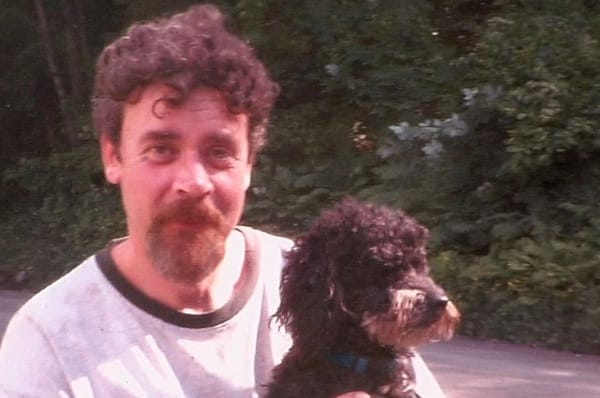
In the first three weeks following the police taser death of MacAdam Mason, an unarmed epileptic Vermont man, fewer than 100 people signed an online petition calling for a taser moratorium in the state, a call that had already been rejected out of hand by Vermont’s Democratic Governor, Peter Shumlin.
In the week since former Democratic Governor Madeleine Kunin signed the moratorium petition, the number of other signers has surged past 1,000 people from all parts of the state, along with a handful of out-of-state signers, a grassroots response mostly ignored by Vermont’s mainstream media.
By the time the Rutland Herald “broke” the story of the Kunin signing four days after the fact, the total stood at 674. Kunin was #86 on July 12. As this is written there are 1063 signers, many of whom raise concern about what they see as increased police violence, including several killings, in Vermont in recent years. (Some sample comments are below)
Public concern over police use of tasers became increasingly widespread after June 20, when, at the end of a three-hour standoff, Vermont State Police tasered Mason in his dooryard and he died almost immediately. Police and Taser International take the position that there’s no proof the taser “killed” Mason, but they don’t dispute the sequence of events: a trooper tasered Mason and he never regained consciousness, finally being pronounced dead at a nearby hospital.
Details of Taser Death of Unarmed Epileptic
Also undisputed is that Mason suffered a gran mal epileptic seizure on June 19, one of many just this year that typically left him disoriented and cranky. The day after his seizure, the 39-year-old artist called a suicide hotline. No record of that call is yet public. The hotline told police that Mason was suicidal and threatening to harm others. His family disputes that and at no time during the events leading up to his killing did he have a weapon.
Two Vermont State Troopers responded to the hotline call, arriving after three in the afternoon at the house where Mason was living with Theresa Davidonis, 51, and her children. Eventually at least four troopers would be on the scene. When the first pair arrived, Mason was inside the house, where he stayed, refusing to let them in. He talked to the troopers some, but it’s unclear what was said.
At some point, police called Ms Davidonis home from work with a friend and when they arrived, the house was empty. Mason had slipped out of the house, unnoticed by police, and was apparently hiding in nearby woods. According to Davidonis, she tried to explain Mason’s condition to the police: that Mason was an epileptic who’d had a recent seizure, that he was an artist, that he was an alcoholic sober three years, that he was a gentle person normally, and that he was unarmed. She assured them there were no weapons on the premises.
Although police then called in a K-9 unit to help search for Mason, Davidonis eventually persuaded the police to withdraw, dog and all. Soon after, Mason emerged from the woods. Davidonis says that she stayed with him for about an hour, but that he was not especially communicative, that he was angry about the cat litter box and angry at the police. Eventually she decided to leave him alone, the same advice she’d given the police, to let him calm down on his own, and she went back to work.
Police Leave Mason Alone, Then Come Back
Once she was gone, the police returned. They called Davidonis again, about 15 minutes after she’d left. This time she returned with her son Aleks, 25. She argued with the officer in charge about leaving Mason alone and she recalls the officer saying, “We can’t just leave him out there.” But police prevented family members from approaching Mason to try to calm him down.
While Davidonis and the officer were still talking, two other troopers had been facing Mason, one with a gun pointed at him. That trooper decided the gun was unnecessary and switched to his taser, ordering Mason to get down on the ground so he could be taken in. Hearing the officer’s shouted commands, Davidonis and her son came around the house to witness the scene.
Here their account differs significantly from the official version: that Mason was uncooperative and somehow threatening to the trooper with the taser, as Mason was moving forward up a slight incline with a clenched fist. Davidonis and other family members say Mason was not threatening, that his hands were raised, that they warned police that the taser could kill him.
The trooper fired the taser, Mason dropped to the ground not breathing, police and rescue workers were unable to revive him, and he was dead on arrival at the hospital. The trooper who fired the taser had not completed his taser training.
The matter is under internal investigation and results have not yet been made public. Results of the June 21 autopsy are also not yet public.
Governor Rejects Suspension of Taser Use
The first formal call for a moratorium on police use of tasers in Vermont came on June 27, a week after Mason’s death, when the Vermont chapters of the National Alliance on Mental Illness, the American Civil Liberties Union, and Legal Aid’s Mental Health Law Project joined in a call for police to refrain from using tasers at least until the state implements a coherent policy on taser use and all Vermont police officers are trained not only in taser use, but in dealing with people who are disabled or have emotional or mental problems.
While the Vermont Department of Public Safety “appreciates the concerns expressed about the use of tasers,” according to a June 27 press release, it did not put a moratorium in place. Rather, the department promised “to gather data and thoroughly evaluate the incident to enable the department to make meaningful decisions regarding the continued use of tasers.”
Also on June 27, Gov. Shumlin and Attorney General William Sorrell held a joint, 13-minute press conference to reject a moratorium, although Shumlin’s answer suggested he hadn’t grasped the difference between a ban and a moratorium: “… the notion that we stop using tasers in Vermont, I think, would result in police officers having to use bullets more than taser shots.”
Shumlin seemed not to understand what had happened to Mason, telling reporters: “This is what I want to say – you go out there – as a law enforcement officer – and have someone threaten to kill you, threaten to kill other people, and then second guess every move that they make when they make them – I don’t think that’s appropriate.”
Pressed by reporters, Shumlin admitted he didn’t know the circumstances of Mason’s death: “You seem to know more than I do…. You have facts I don’t have. “
Siding with the Governor, the Attorney General noted that: “Tasers are lethal weapons, they’re obviously less lethal than firearms.” And, he added, “The police can’t pre-ordain the optimal situation for discharge.”
http://youtu.be/kKF2Z8j-_nc
Petition for Taser Moratorium
Two days later, on June 29, Morgan Brown of Montpelier posted an online petition for a taser moratorium.
“The undersigned petitioners urge Governor Peter Shumlin to call for an immediate moratorium on the use of Tasers by the Vermont State Police as well as all other law enforcement agencies across the state. This moratorium should remain in place until standardized statewide policies are put into practice that will reduce the risks posed by the use of Tasers, as well as, until all officers across the state whom are armed with Tasers receive standardized, state-approved, training in the use of Tasers, including more extensive, standardized, state-wide and state-approved training for dealing with people in a mental health crisis than is already currently available to police officers.”
A sampling of some of the first 1,000 signers and their comments:
#946, Theresa Davidonis, Thetford Center: I watched MacAdam Mason, my love, die instantly from being shot in the chest at 5 ft with the taser after the police were told many times about his seizure condition.
#939, Ben Peberdy, White River Junction: Governor Shumlin needs to understand that there is a growing "trigger-happy" culture of taser abuse within the Vermont police community and that this has resulted in wrongful deaths. We need a comprehensive approach to taser policy to ensure that they are used in a reasonable, acceptable manner. Ignoring the problem is only going to make things worse.
#849, Jonathan Crowell, Williamsville: I was tased during a non-violent protest by the Brattleboro Police Department- OUCH! I believe this was a form of torture.
#840, Walter Wallace, Springfield: Stop the slide of our beloved Vermont into a model Police State. The State Police are totally out of control (from excessive use of force such as this tasing incident to falsifying time sheets) and must be reined in immediately.
#770, Audrey Famette, Montpelier: After extensive discussion concerning purchasing tasers in Montpelier, we voted not to purchase. If police departments find they have some extra money it would be better spent for additional de-escalation training for police officers.
#698, Johanna Robohm, Jacksonville: This incident… brought back immediate memories of a similar incident in Brattleboro over a decade ago, I believe, where officers shot and killed a mentally disturbed person in a church.
#586, Neal Meglathery, Thetford Center: Nobody deserves this kind of "protection".
#418, Nicholas Marchese, West Dummerston: Really? Another VT police execution of an unarmed person suffering a psycological crisis? Way too eager to use excessive force!!!!!!
#363, Carl Aronson, Randolph: As a retired Police Veteran, I never used Tasers and I don't think they are needed. Officers must first use person to person communication not just orders, If force is needed mace and controlled take-down force protecting the subject. Policing is about protecting. Protecting the lives, property, and the rights of everyone. I always defused my situations in a way that the next day I could stand by this person with dignity and honor.
#266, Thomas Zabski, Burlington: They used cattle prods on non-caucasions in Alabama 50 some odd years ago. One would think the American Disabilities Act would weigh in on this kind of thing.
#145, Rhonda Taylor, Moultonborough, NH: He was my precious son.