
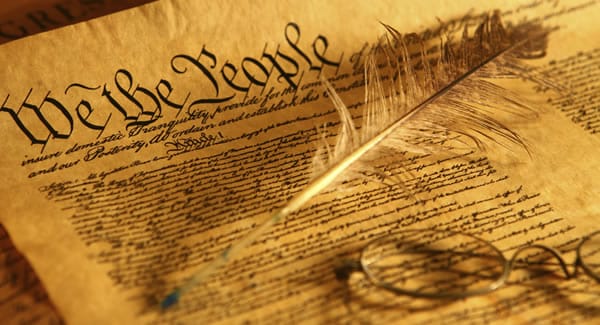
The U S Constitution establishes, “Congress shall have the power to lay and collect taxes.” It does not dictate any limit and ambiguously identifies how taxation revenue is spent. This has led to Congress treating tax revenue as an endless source of funding for federal projects and earmarks. Our national debt is already at a dangerous level and grows daily. It will soon become a threat to our national security. Therefore it is critical that your Congressman have a clearly defined taxation policy that is not subject to political whims or election time antics.
I will address taxation from an ownership, effectiveness, and moral perspective.
The first and most important fact that must be established is in the United States of America the government recognizes private property. The government does not own everything as in communist countries. An American citizen’s income belongs to that citizen alone. When a politician (or President) tells you about how much a tax cut (reduction in tax rate) is going to cost the federal government, that politician has adopted a communist philosophy of private property. They are working from the premise that everything belongs to the government and the citizen has been granted the privilege of keeping some. The founding documents clearly establish the citizen’s right to private property.
Secondly, taxation must be responsible and therefore, bed rocked in effectiveness. Ineffective taxation policy is poor stewardship of the citizen’s hard-earned money. Every dollar of taxed revenue is one less dollar that is in the private sector of that Congressional District. In some cases that is an acceptable deal, for instance the defense of our Nation. In most cases it isn’t.
It is revenue that flows from our District to Washington DC. This results in less money here in the 53rd Congressional District. Less money means less commerce conducted. This results in higher unemployment. Taxation that results in more tax revenue leaving the Congressional District than is returning to it will result in fewer jobs here. The most effective use of revenue is for it to never leave here as taxation.
Thirdly, the use of petty prejudices and envy to justify taxation is immoral. Furthermore, to use the power of the federal government to confiscate earned income from a group of people who are a minority and do not possess the voting power to stop it is fundamentally un-American. This is institutional discrimination and historically the propaganda tool of communists and slave-owners. It is beneath our Nation. Taxation must be fair to all citizens and not subject to irrelevant resentments.
As your Congressman, I will recognize that your hard earned income belongs to you, not the federal government. I understand that taxation is necessary, but it isn’t to fund pet-projects. Lower taxes leaves more revenue here to grow jobs in the private sector. Finally, I will oppose and expose any attempts to use taxation for class warfare and income redistribution.
Nick Popaditch – Former Marine – Running for Congress for 53rd District