
Photo: LiveScience.com
When the topic of drug policy is debated and discussed, the conversation is typically centered on the criminal justice aspect of drug prohibition-- and for good reason.
As a result of drug prohibition there’s been a massive increase in the number of individuals incarcerated and arrested for drug crimes over the past thirty years; civil liberties and the Fourth Amendment are seemingly becoming a relic of the past due to asset forfeiture laws, stop and frisk, and Supreme Court acquiescence to police for drug investigations; and all the while law enforcement departments are becoming increasingly militarized in both their weapons and tactics.
With problems like these it is easy to understand how this aspect of the War on Drugs is over-emphasized. Mostly overlooked in discussions about drug prohibition and its unintended consequences are the undeniably deleterious effects that the drug war has had on the environment.
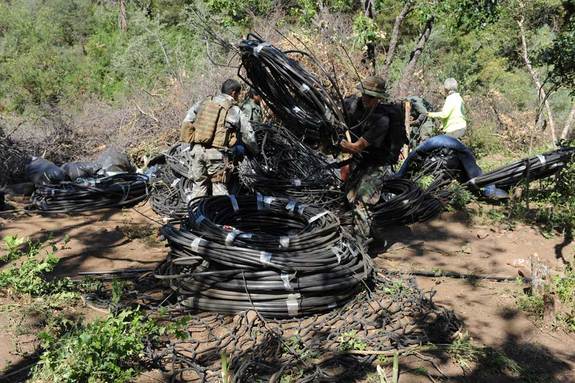
Because of the draconian criminal penalties for cultivating marijuana, most commercial growers are eschewing the risks of growing on their own property in favor of lush, dense, and resource-rich national forests and public lands. Commercial marijuana grown deep inside public lands insulates growers from detection by law enforcement.
In the event a grow area is detected by law enforcement, the crop will most likely be the only thing uncovered. Keeping the cultivation away from their own property makes it more difficult for police to know precisely who is engaged in commercial grow operations, and protects growers from intrusive police tactics like asset forfeiture to unjustly seize property.
And it is these commercial grows inside of national forests and public lands that have led to a great deal of serious damage to the environment. The reasons are simple: these “lands are remote with few people, the forest vegetation is dense, there is an extensive system of roads and trails (both open and closed), soils are fertile, and water for irrigation is available for the diverting."
In order to grow deep inside these public spaces, natural forest and vegetation must be cut down and destroyed, wildlife must be removed from the vicinity, whole areas of plants are uprooted to form a grow area, and water from rivers, streams, and lakes is diverted through rigged irrigation systems to hydrate the marijuana crop. Meanwhile chemicals are used to protect the marijuana plants and irrigation lines.
By using forests and other public lands, commercial marijuana growers are destroying the natural habitat and ecosystem of the lands they invade. A perfect example of the potentially irreversible environmental harm caused by drug prohibition is the fisher, a forest carnivore and nearly endangered species that resides up and down the Pacific Northwest. Marijuana Policy Project’s Bob Capecchi explains:
According to researchers led by veterinary scientists from the University of California at Davismartensspotted owlsSierra Nevada red foxes


As Capecchi notes, there is no incentive for those engaged in illicit commercial grow operations to care or do anything about the ecological damage their activities cause. Drug prohibition creates opportunity costs. When your most pressing problems are possible arrest, imprisonment, seizure of property, and potentially violent disputes with rival drug enterprises, the environmental impact of your marijuana grow just isn’t something that is really considered.
The simplest way to solve the ecological devastation created by commercial marijuana operations deep inside public lands, as Capecchi points, would be to legalize and regulate the marijuana industry:
"Like other agricultural operations, marijuana grows would be regulated and, more importantly, inspected. Environmental regulations would limit when and what types of pesticides could be used. Additionally, grows would be moved out of the remote areas where they are currently cultivated and where wildlife thrives; we don’t see illicit vineyards crop up on remote public lands for a reason. Finally, financial penalties would be placed on growers who violate environmental regulations and inspections would make sure the regulations are being followed. A well-regulated and inspected system of marijuana cultivation would ensure that the industry is environmentally friendly (or at least not environmentally destructive). It’s well past time we stop criminalizing otherwise law abiding marijuana users, stop wasting billions in tax payer money funding a prohibition that has never worked, stop foregoing billions of estimated tax revenue, and stop fostering a niche agricultural industry free from any environmental rules and regulations. It’s well past time we tax and regulate the marijuana industry."
As previously written at IVN, the expansive effects of drug prohibition can be felt throughout all aspects of US public policy, and the environmental impact is no different. The ecological devastation the drug war creates is very real, and just one of many unintended consequences of the decades-long War on Drugs.