
Photo: Al Arabiya
On Monday November 19th, the University of San Diego International Law Society hosted a debate on nuclear proliferation with an emphasis on Iran. Joining in the debate were Mr. Jan Fladeboe, a Foreign Affair Officer of the Department of State's Office on Non-Proliferation, and Dr. Edward Luck, Dean of the University of San Diego School of Peace Studies and Assistant Secretary-General and Special Adviser to United Nations Secretary-General Ban Ki-moon. Both guests gave their opinion in their name alone, and none of the following positions represent the official position of the United States or the United Nations.
During the debate, both orators have made compelling arguments, from a technical as well as a diplomatic standpoint that a war between the United States and Iran is very unlikely to happen, despite the political rhetoric played during the election season.
Mr. Jan Fladeboe focused on the technological barriers to having a nuclear weapon, which leads him to believe that Iran is far from being able to master the technology necessary to acquire such a destructive force. Iran would need two main capacities to deploy the force: the capacity to produce a nuclear weapon and the capacity to build reliable missiles that will carry the weapon.
According to Mr. Fladeboe, the missile technology alone is extremely complicated. Iran's latest missile, the Shahab-3 is not completely reliable, and they continue to struggle with consistency.
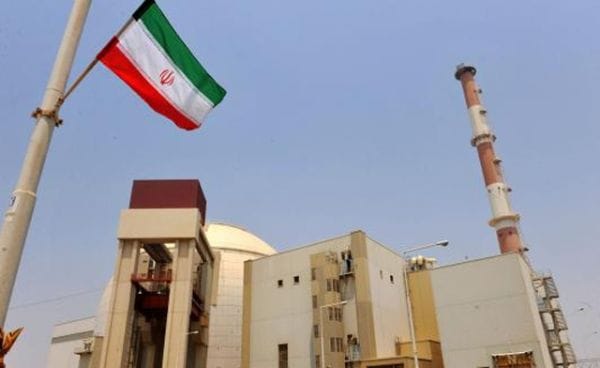
The second element is the construction of the nuclear weapon itself, which requires fissile material such as plutonium. It is possible to obtain plutonium by reprocessing nuclear fuel used in a civil nuclear plant. Iran officially opened its first nuclear plant, Bushehr, in September 2011, with the assistance of the Russian civilian nuclear power corporation, Rosatom. The move raised fear of progress in making a nuclear bomb. However, Mr. Fladeboe highlights the unlikeliness of such a situation.
Like other countries that have nuclear technology, Russia's nuclear energy commercial activities are highly controlled and closely watched by international bodies, such as the International Atomic Energy Agency or the Nuclear Suppliers Group. Under these rules, Russia will provide the nuclear fuel for the Iranian plant and will take it back when the fuel cycle ends, around 18-20 months later, thus not giving Iran the opportunity to take possession of that nuclear material.
Additionally, Iran does not have the capacities to reprocess the nuclear fuel and thus extract plutonium. Before any reprocessing can be done, the nuclear fuel needs to cool down for a period of one year, which would make the spontaneous appearance of a nuclear weapon quite unlikely.
For these reasons, Mr. Fladeboe estimated that Iran was not in the capacity to be in possession of a nuclear weapon in the near future and, as such, denied the need for a US military intervention.
Dr. Edward Luck approached the question from a conflict resolution perspective and reached the similar conclusion that a military intervention was extremely unlikely and unnecessary.
Dr. Luck noted that, historically, it would not be the first time a country acquired a nuclear weapon to America's dismay. There has not yet been an instance where two countries that had nuclear weapons used such force against one another. The USSR developed the bomb, but did not go to war with the US in the end. India and Pakistan, who have had a tumultuous and tense past, both acquired nuclear technology and have yet to deploy it upon the other.
Despite the rhetoric, Israel would not have the military capacity to destroy all the Iranian facilities involved the program. Only the United States has such a capacity. Thus, it would have to be the United States to use military intervention, an option that has little popular support.
To illustrate such scenario, Dr. Luck evoked a simulation in which he participated. Acquiring nuclear capacity is a step-by-step process and the simulation encouraged the participants to consider at what turning point military force is necessary to stop the attainment of a nuclear bomb. The simulation concluded there is never a step which makes military intervention worth its potential enormous consequences. Therefore, in reality, the option of a military intervention is, in his opinion, off the table. The bellicose rhetoric used by politicians, he says, whatever the reasons behind it, should be used with more caution.
Sanctions against Iran have become a more accepted option to leverage against nuclear capabilities. The United Nations Security Council has passed numerous rounds of sanctions against Iran, which despite the divergent interests of China and Russia, have passed unanimously in a distinct show of consensus.
Dr. Luck concluded that given the explosiveness of the region, between the situation in Syria and the Israli-Palestinian conflict, no country wants additional escalation in the region, and everybody has been exercising a degree of caution.
This debate offered an interesting alternative to the usual sensationalism of the Iran threat by the media, particularly during the US election cycle, and gave a reassuring opinion by two experts that military conflict with Iran is not a realistic ending.