
Credit: statejournal.com
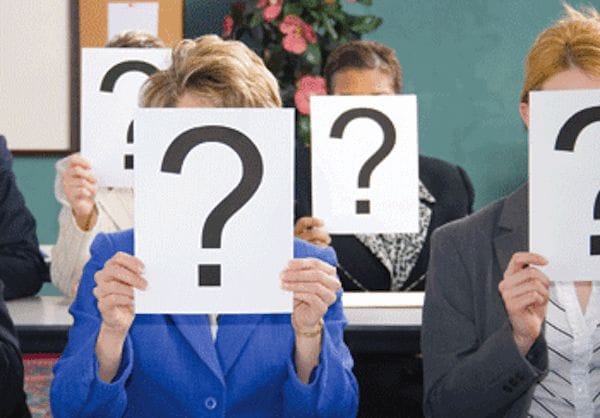
Despite the media focus on abortion and contraception issues, there are reasons to believe the crucial female swing voter will base her vote on economics, not “compassion politics.”
While one-third of Americans are self-described independent voters, only 3 to 5 percent of the electorate can actually claim to be “swing voters.” The rest either vote along party lines or reside in states like California or Texas, where the outcome is clear.
This small but crucial 3 to 5 percent is subject to pollster scrutiny—and an estimated $2 million in campaigning efforts—and a rough (yet disputed) sketch has emerged of the female swing voter: she is not college-educated, she is white or Hispanic, and, perhaps most importantly, she is . . . a she.
She is also misunderstood by major media. “Women’s issues” have become a electoral catchphrase, with experts claiming that this is the first election in which the female vote may actually determine the outcome of our presidency. Yet, “women’s issues” have become synonymous to “social issues” like abortion and contraception, with a recent article claiming that women vote for “compassion politics.”
Even a recent Gallup poll provided potentially misleading results, showing that a plurality of women in swing states name abortion as the most important issue for women, but failed to provide how many women, if any, within this plurality are true swing voters.
Women in swing states are not necessarily representative of the small number of female swing voters. Even if they are, another poll showed that when women were asked to name the most important problem facing the nation—leaving out mention of “women’s issues”—their responses were statistically identical to men’s. There is no clear reason to believe that women will vote based on their conception of women’s issues over national issues. Considering the demographic of the swing woman, it is likely that she will vote based on the economy—something that is increasingly a women’s issue in itself.
First of all, the female swing voter—believed to be a low-information voter who doesn’t follow the daily back-and-forth political news—is probably less aware of the recent Mourdock comments and more aware that the social-economic dichotomy is a flawed view of election politics. Access to contraception is a matter of cost, and lost jobs put emotional strain on families. To working-class women, social issues and economic issues are inseparable.
Besides everyday experience and insulation from 24-hour news cycle political drama, another reason the female swing voter is likely to be focused on the economy is that she is the hardest hit by poverty. Poverty among women is significantly higher than poverty among men.
The poverty rate among women last year stabilized at its highest peak in eighteen years, with the “extreme poverty rate” in 2010 reaching the highest ever recorded. More than 17 million women were living in poverty in 2010, compared with 12.6 million men. For Hispanic women, who may make up 000% of swing voters, the poverty rate increased even further to 25 percent. Of course, single mothers struggle the most with poverty.
The “soccer moms” and “security moms” of prior election cycles have given way to “waitress moms,” the working-class swing woman. Whether or not the female swing voter is a mom, her blue collar position implicates another key policy priority for working-class women—pay equity. Women working full-time, year round earn 77 cents to every dollar paid to their male counterparts. The wage gap is even starker for Hispanic women, who earn 55 cents to every dollar paid to white, non-Hispanic men.
Health insurance, a paragon of socioeconomic inseparability, is another driving factor behind the female swing voter's electoral decisions. Nearly one in five women did not have health insurance in 2011, despite a modest decrease in the number of uninsured women from 2010.
Because the female swing voter is suffering economically more than her male counterpart, and swing voters in general are more likely to vote based on their economic situation, it is difficult to believe that the coveted female swing voter will base her decision on stereotypical “women’s issues” such as abortion and contraception.
While these issues remain important in framing future legislation and stimulating public dialogue, they will not determine the outcome if female swing voters have anything to say about it. The numbers show that the economy—in particular, pay equity, workplace flexibility, health insurance, and job creation—is the fundamental women’s issue.
The biggest setback for the female swing voter could be her inability or unwillingness to vote. For all the pollster and campaign attention she is receiving, if voter turnout is lower in 2012 than in 2008—a likely possibility—it is the swing voter who will statistically stay at home (or more likely, go to work) and skip the booths on Tuesday.