
Many people like to ask: what is politics? It's a good question, since these days it seems like politics covers nearly every subject. In many ways, it does.
If you are asking what is politics in terms of educational subject, by strict definition, it would be an interdisciplinary study of the art (or science) of running a government or the affairs of a state. It is a huge subject and diverges at many points.
Politics can be art and heavily philosophical. There are many different schools of thought in politics, especially when looking at international politics. There is realist, neo-realist, liberal, constructionist, even feminist thought can be applied to the way countries interact with one another.
When asking what is politics, it is also important to examine the minds who shaped original political and philosophical thought. These range from Plato and Aristotle, to Machiavelli and Karl Marx, to Alexis de Tocqueville, and especially our Founding Fathers. All of these men (and yes, historically politics has been very male-dominated) examined and pondered the philosophical motivations that would further along the development of the politics definition.
There are many kinds of political systems, as have been debated throughout the years. In the United States, we have a federal republic system. Kings ruled through monarchies, political elites controlled power through aristocracies, and tyrannies were ruled by tyrants. Dictators have risen and fallen throughout the years. Democracy is the form that the Founding Fathers chose to take, in order to promote liberty, freedom and the pursuit of happiness.
International politics often centers upon various conflicts rising from the protection of a state's sovereignty. Sovereignty is a concept developed by political thinkers. Sovereignty is also present in the United States' Constitution and divides power between the different branches of federal government, as well as the rights reserved for states and individuals.
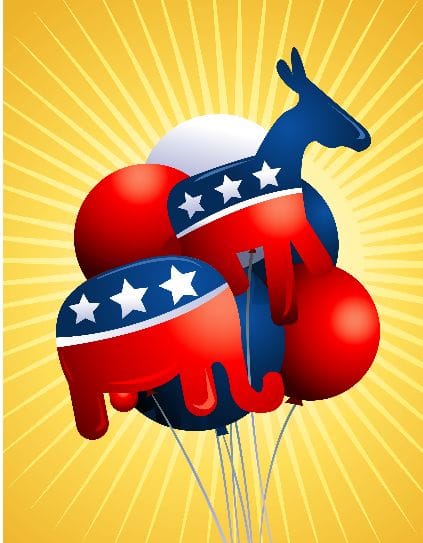
Political parties are political organizations that attempt to attain a certain amount of power in a governmental system. Many times, their aim is for a majority. Political parties are linked by people with similar ideological views which they tend to agree on and put forth on a unified platform. They push political agenda and/or reform in line with these views. In many political systems, due to the makeup of a majority political party and/or many minority political parties, coalitions are formed. This often brings together different political parties with selective overlapping agreement on certain issues.
Today, politics looks like it covers everything: education, business, health, even sports and fashion. Politics has evolved and most institutions integrate political principles in their organization. Unions and medicaid are socialistic examples of politics. Volunteering for PTA or a city council is also politics. Cable news follows, sometimes sensational, national political issues. Everywhere you turn it seems these days you can find the answer to "what is politics?".