
Credit: scdd.ca.gov
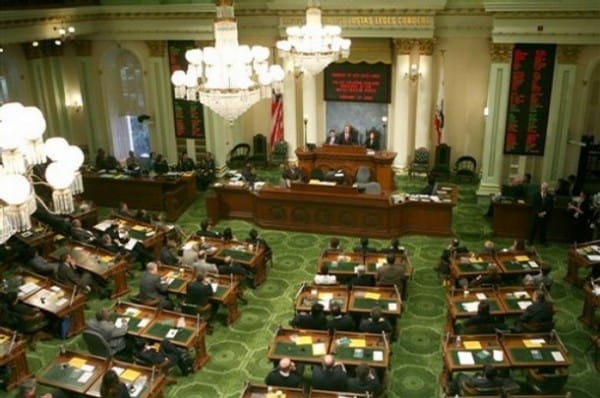
Assemblyman Tom Ammiano (D-San Francisco) has introduced and passed AB-241, which writes a “Domestic Workers' Bill of Rights” into law. This is Ammiano's second try at such a bill, which attempts to solve the problem of low wages and unfavorable working conditions.
According to the bill:
“Domestic workers usually work alone, behind closed doors, and out of the public eye, leaving them isolated, vulnerable to abuse and exploitation by some employers, and unable to advocate collectively for better working conditions. This bill recognizes that many personal attendants have positive working relationships with their employers""However, it must also be recognized that there are other situations where domestic workers are verbally and physically abused or sexually assaulted, forced to sleep in conditions unfit for human habitation, and stripped of their privacy and dignity.”
A recent report titled “Home Economics: The Invisible and Unregulated World of Domestic Work” and published by the National Domestic Workers Alliance and the Center for Urban Development at the University of Illinois cites some statistics on their working conditions.
“Low pay is a systemic problem in the domestic work industry. 23 percent of workers surveyed are paid below the state minimum wage. 70 percent are paid less than $13 an hour.”
The previous version of the bill, AB-889, was ultimately vetoed by Governor Brown after citing concerns over the potential impact it could have on the disabled. His veto message included the following question:
“What will be the economic and human impact on the disabled or elderly person and their family of requiring overtime, rest and meal periods for attendants who provide 24 hour care? What would be the additional costs and what is the financial capacity of those taking care of loved ones in the last years of life? Will it increase costs to the point of forcing people out of their homes and into licensed institutions?”
I myself am disabled and require domestic services. I receive them under a state program called In-Home Support Services (IHSS). It allows me to hire anyone I want (provided they can pass a background check) at $9.50/hour for about 100 hours a month.
I currently employ my mother, but a few years ago I hired a girl from Chicago. She moved to California and lived with me in the dormitories at UCLA. It was thanks to her that I was able to do so.
The original bill applied to the IHSS program, but this version exempts it. Still, it's important to understand the reality for a lot of people who hire domestic workers.
Disability Rights of California (DRC)*, who opposes the bill, put out the following statement,
“Californians with disabilities, including seniors, are among the poorest people in the state... 19.2% live on less than the Federal Poverty Level. 28.6% have from 100% to 199% of the FPL. 17.4% have from 200-299% of the FPL. 34.8% have at least 300% of the FPL.”
For the majority of disabled Californians, a simple bill like this could severely hamper their ability to live independently. Even the smallest wage increase could mean the difference between living independently or living in an institution, which would be even more expensive for taxpayers. Still, there's no denying that there's a very real problem.
One solution might to expand IHSS eligibility and raise providers' wages. The program is already considered to be cost effective. A 2010 study concluded that if California simply transitioned one third of nursing home residents back to the community, the state would save almost 300 million dollars.
However, that idea might have trouble gaining traction considering the $2.7 million organizations who support the bill spent to have it pass.
*DRC is currently representing me in an unrelated matter.